Pool installation in Lancaster County is not the same project it would be in Florida or Arizona. Our freeze-thaw cycles, rolling farmland topography, limestone geology, and township-by-township permitting rules all shape what gets built and how much it costs. Homeowners who understand those local factors before calling contractors end up with better bids, fewer change orders, and far fewer surprises once the excavator arrives.
This guide covers the full arc of a backyard pool project: how the three main pool types compare, what the permit process actually involves in Pennsylvania, how to vet local pool installation experts, a realistic construction timeline, and the mistakes that cost Lancaster County homeowners the most money. By the end, you will be able to read a proposal critically instead of just comparing bottom-line numbers.
Key Takeaways
- Pool installation in Lancaster County requires municipal permits, not just a county approval.
- Pennsylvania registers home improvement contractors; always verify the number before signing.
- Fiberglass installs fastest, concrete offers the most design freedom, vinyl costs least upfront.
- Limestone bedrock and high water tables are common local excavation surprises. Budget for them.
- Fall and winter contracts often mean earlier spring build slots and better scheduling.
- A written contract with a payment schedule protects you far more than a verbal quote.
Choosing Your Pool Type: Fiberglass, Vinyl Liner, or Concrete
Most residential pool installation services in Pennsylvania build one of three structures. Nearly every pool installation in Lancaster County starts with this decision, and the right choice depends less on preference than on your yard access, soil, and how long you plan to stay in the home. If you are still weighing options, we recommend you compare fiberglass and concrete pool performance to understand how each material handles our climate.
Comparison Table
| Factor | Fiberglass | Vinyl Liner | Concrete / Gunite |
|---|---|---|---|
| Typical install time | Shortest, often a few weeks | Moderate | Longest, often several months |
| Upfront cost | Middle | Lowest | Highest |
| Design flexibility | Limited to manufactured shells | Moderate, custom shapes possible | Fully custom, any shape or depth |
| Long-term upkeep | Low, no resurfacing | Liner replacement every several years | Resurfacing and acid washing over time |
| Surface feel | Smooth gel coat | Soft, smooth | Rough unless finished with pebble or tile |
| Chemical demand | Generally lower | Generally lower | Higher, cement affects water chemistry |
| Yard access needed | Wide access for crane and shell delivery | Standard | Standard |
| Freeze-thaw performance | Flexes well | Liner vulnerable to shifting | Durable when properly engineered |
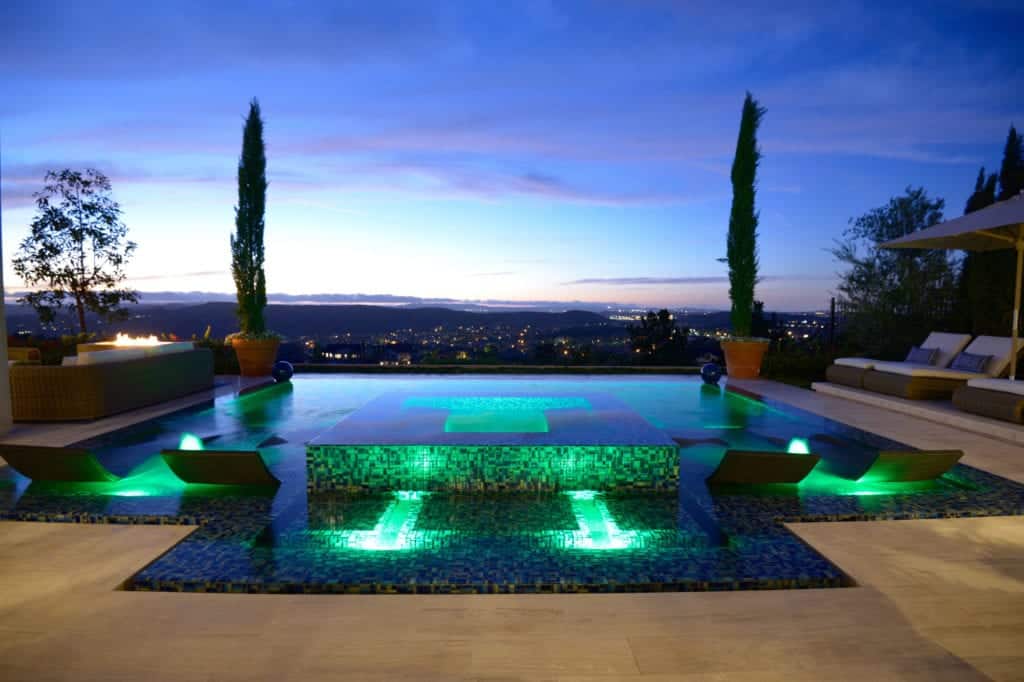
If your lot has narrow side access or mature trees blocking a crane path, fiberglass may be off the table regardless of budget. If you want a vanishing edge, a tanning ledge with custom depth, or an irregular shape that follows a slope, custom inground pool construction in concrete is the realistic route.
Pros and Cons at a Glance
Fiberglass pros: fast installation, minimal disruption, low maintenance, smooth surface, strong resale appeal.
Fiberglass cons: fixed sizes and shapes, higher upfront cost than vinyl, delivery access can be a dealbreaker.
Vinyl liner pros: lowest entry cost, soft underfoot, quicker than concrete, easy to modify shape.
Vinyl liner cons: recurring liner replacement, vulnerable to punctures, walls can shift in unstable soil.
Concrete pros: unlimited design, longest structural lifespan, adds strong property value, handles slopes well.
Concrete cons: highest cost, longest build, periodic resurfacing, more chemical management.
Permits, Codes, and Local Requirements
This is where do-it-yourself research saves the most grief. Pennsylvania enforces the Uniform Construction Code statewide, and residential pools fall under it. You can reference Pennsylvania’s Uniform Construction Code directly through the Department of Labor & Industry for the foundational standards. Local townships and boroughs, not Lancaster County itself, issue the actual permits and run inspections. Manheim Township, Lititz Borough, and East Hempfield Township each have their own submission requirements and setback rules. To fully navigate Pennsylvania pool permit requirements, it helps to understand both state and municipal layers.
Expect requirements in several categories:
- Zoning and setbacks. Pools generally cannot sit within a certain distance of property lines, septic systems, or wells. Rural parcels with on-lot septic need extra care here.
- Barriers. Codes derived from the International Code Council’s swimming pool and spa provisions govern fence height, gate self-closing and self-latching hardware, and gaps beneath barriers.
- Electrical bonding. Metal components near the water must be bonded per the National Electrical Code. This requires a licensed electrician and a separate inspection.
- Stormwater and earth disturbance. Larger projects can trigger review by the Lancaster County Conservation District for erosion and sediment control. We recommend you review Lancaster County erosion control guidelines early if your site involves significant grading.
- Deed restrictions. HOAs in newer developments sometimes impose rules stricter than township code.
Reputable professional pool contractors in PA handle permit submission as part of their scope. Ask directly whether permits are included or billed separately, and get the answer in writing.
How to Vet Licensed Pool Builders in Pennsylvania
Pennsylvania does not issue a statewide trade license specifically for pool building. What it does require is registration under the Home Improvement Consumer Protection Act, administered by the Pennsylvania Office of Attorney General. Registered contractors receive a PA Home Improvement Contractor number that must appear on contracts, estimates, and advertising. Before moving forward, always search the Attorney General’s contractor registry to confirm active status.
That distinction matters. When you search for licensed pool builders in Pennsylvania, what you are really verifying is registration status, insurance, and demonstrated local experience.
Step-by-Step Vetting Process
- Confirm the PA HIC registration number. Ask for it, then verify your contractor’s PA HIC registration through the Attorney General’s public search rather than trusting a number printed on a truck.
- Request certificates of insurance directly from the insurer. You want general liability and workers’ compensation, with current effective dates.
- Ask for three local references from the past two years. Recent, nearby projects tell you more than a decade-old portfolio.
- Visit an active job site. Site cleanliness, crew organization, and material staging reveal how your project will run.
- Read pool builder reviews across multiple platforms. Look for how the company handled problems, not just five-star praise.
- Compare three itemized bids, not three totals. Line items expose what one builder included that another quietly left out. It helps to use our pool builder vetting checklist to ensure you are comparing apples to apples.
- Review the written contract before deposit. Confirm scope, materials, allowances, payment schedule, change-order process, and warranty terms.
If two bids differ by a large margin, the cheaper one is usually excluding something: excavation contingency, electrical work, decking, fencing, or startup chemicals. Ask the lower bidder to price the missing items and compare again.
Seven Mistakes to Avoid
- Signing before permits are confirmed. A setback problem discovered after excavation is expensive to fix.
- Skipping a soil and access evaluation. Limestone bedrock and seasonal high water tables are real considerations in parts of the county.
- Ignoring the deck and landscaping budget. Many homeowners are surprised that surrounding hardscape can rival the pool’s own cost. Make sure to budget for complementary hardscape and landscaping alongside the pool shell.
- Paying a large deposit upfront. Payment should track construction milestones.
- Overlooking ongoing costs. Chemicals, electricity, heating, opening and closing service, and winter covers all recur annually.
- Choosing a contractor with no local build history. Freeze-thaw detailing and township processes are learned locally. We encourage you to explore our Lancaster County pool projects to see how local conditions shape real installations.
- Accepting verbal promises. If a feature is not in the written scope, assume it is not included.
Do and Don’t Checklist
Do:
- Call for a utility line locate before any digging.
- Get every change order in writing with a price attached.
- Ask how the builder winterizes pools in this climate.
- Plan equipment pad placement with noise and access in mind.
- Confirm who handles final inspection scheduling.
Don’t:
- Don’t pay in cash or off-contract.
- Don’t assume fencing is included in the pool quote.
- Don’t schedule your build start for peak summer and expect fast turnaround.
- Don’t skip reading the warranty exclusions.
- Don’t let landscaping crews compact soil over new plumbing runs.
Realistic Timeline for Lancaster County Pool Projects
Weather drives everything here. The building season for pool installation in Lancaster County is compressed, because the ground is often unworkable from late fall through early spring. For a broader perspective, review a detailed pool construction timeline that breaks down each phase beyond the seasonal window.
A practical sequence looks like this: design and site evaluation, contract signing, permit submission and approval, excavation, structural installation, plumbing and electrical rough-in, inspections, decking and hardscape, fencing, water fill, equipment startup, and final inspection.
Permit review alone can take several weeks depending on the municipality. Homeowners who sign contracts in autumn frequently secure the earliest spring construction slots, while those who start shopping in June often wait until the following season.
If your goal is swimming by early summer, begin conversations with inground pool companies near you the previous fall. If you have a flexible timeline and want maximum negotiating leverage, approach builders during their slower months.
A Real World Scenario
A family in a Lancaster County township wanted a custom concrete pool with a raised spa on a gently sloping half-acre lot. Two of the three best inground pool contractors in PA that they contacted quoted from a site plan alone. The third insisted on a soil evaluation first and discovered shallow rock across part of the proposed footprint.
That builder proposed shifting the pool fifteen feet and adjusting the depth profile, then included a written rock-contingency line item. The initial quote was higher than the others. The final cost came in close to the original estimate because the surprise had been priced in rather than discovered mid-excavation.
The lesson is straightforward: a thorough pre-construction evaluation is not an upsell. It is the cheapest insurance in the entire project.
Quick Answers: FAQ
Do I need a permit for pool installation in Lancaster County?
A: Yes. Permits are issued by your municipality, not the county. Requirements cover zoning setbacks, barriers, and electrical bonding.
Are pool builders licensed in Pennsylvania?
A: Pennsylvania requires home improvement contractors to register with the Office of Attorney General and display a PA HIC number rather than holding a pool-specific trade license.
Which pool type lasts longest in Pennsylvania winters?
A: A properly engineered concrete pool typically has the longest structural lifespan, though quality fiberglass shells also perform well through freeze-thaw cycles.
How long does an inground pool take to build?
A: Fiberglass installations are usually the fastest, vinyl liner pools fall in the middle, and concrete pools take the longest. Permit review adds time before construction begins.
What is the best time of year to sign a pool contract?
A: Fall and winter. Builders schedule spring work in advance, so early contracts often secure the earliest construction dates.
Is fencing included in a pool quote?
A: Often not. Code-compliant barriers are usually a separate line item, so confirm inclusion in writing.
What ongoing costs should I plan for?
A: Chemicals, electricity for pumps and heaters, seasonal opening and closing, cover replacement, and periodic repairs.
How do I compare bids fairly?
A: Compare itemized line items rather than totals, and ask each builder to price anything a competitor included that they omitted.
Does a pool add value to my home?
A: Industry experts suggest impact varies by neighborhood and pool quality. A well-built, well-maintained pool tends to help most in areas where pools are common.
Glossary of Terms
- Gunite: A concrete mixture sprayed over steel reinforcement to form a pool shell, allowing fully custom shapes and depths.
- Bonding: Electrically connecting metal components around a pool so they share the same electrical potential, reducing shock risk.
- Setback: The minimum required distance between a structure and a property line, septic system, or other feature, defined by local zoning.
- Coping: The finished cap installed along the top edge of the pool wall where the shell meets the surrounding deck.
Conclusion
A pool is one of the largest exterior investments most homeowners make, and the outcome depends far more on preparation than on picking the flashiest design. Matching the pool type to your soil and access, verifying contractor registration and insurance, budgeting for decking and fencing alongside the shell, and starting the conversation months before you want to swim will remove most of the risk from the project.
Successful pool installation in Lancaster County rewards builders who know the local geology, climate, and township processes, and it punishes shortcuts. Use the vetting steps and the do and don’t checklist above as your filter, and insist that every promise appears in the written contract.
Ready to move forward? Schedule your on-site pool consultation and request a fully itemized proposal, then compare it against the checklist in this guide before you sign anything.