Key Takeaways
- Local pool builders Pennsylvania homeowners hire usually know regional soil, frost, and permit rules well.
- National chains often sell standardized packages, but local subcontractors may still do the actual digging.
- Every Pennsylvania home improvement contractor doing qualifying work must register with the Attorney General’s office.
- Custom inground pool construction is usually easier to get from an owner-operated local firm.
- Compare written warranties, payment schedules, and service plans, not just the total price.
- Recent pool builder reviews in Pennsylvania reveal more than any national ad campaign.

An inground pool is one of the largest projects most Pennsylvania families will ever take on, and the builder you choose shapes the result more than the pool itself. If you have been comparing local pool builders Pennsylvania residents recommend against big national brands, you have probably noticed the sales pitches sound almost identical.
The real differences show up later: during excavation, at permit inspections, through the first winter, and when something needs fixing in year three. This guide breaks down how local firms and national chains actually differ, what Pennsylvania law requires, the seven critical hiring mistakes to avoid, and how to decide which option fits your project.
What “Local” and “National” Really Mean in the Pool Industry
The labels are less clear-cut than they sound. A local pool builder is typically an independent company based in your region, often owner-operated, with its own crews or a small team of trusted subcontractors.
A national chain usually falls into one of three models:
- Franchise networks, where a local franchise owner operates under a national brand
- Dealer networks, where a manufacturer authorizes regional installers to sell and install its pools
- Corporate operations, where the company directly employs regional sales and project teams
In the franchise and dealer models, the people digging in your backyard may be local contractors anyway. That matters, because the quality of the installation crew matters more than the logo on the truck. Always ask who will actually perform the excavation, steel, plumbing, and finish work.
Local Pool Builders vs National Chains: Side-by-Side Comparison
| Factor | Local Pool Builders | National Chains |
|---|---|---|
| Design flexibility | High; bespoke inground pool designs, finishes, and features are common | Often limited to set models and package options |
| Knowledge of local conditions | Strong familiarity with regional soil, frost depth, and township rules | Varies by local crew; corporate staff may be unfamiliar |
| Pricing structure | Quoted per project; can vary widely | Often standardized packages with promotional pricing |
| Warranty backing | Depends on company’s stability and written terms | Brand-backed, though terms and claim processes vary |
| Communication | Often direct access to the owner or project manager | Usually routed through sales reps and call centers |
| Post-build service | Many offer opening, closing, and repair services | May refer service to third parties |
| Accountability | Reputation tied to the local community | Reputation spread across many markets |
Pros vs. Cons of Each Option
Local Pool Builders
Pros:
- Deep understanding of Pennsylvania freeze-thaw cycles, clay and rocky soils, and municipal permit offices
- Greater freedom for custom inground pool construction, including unusual shapes and integrated hardscape
- Direct communication with decision-makers
- Local reputation creates strong incentive to resolve problems
Cons:
- Quality varies widely between companies
- Smaller firms may have longer wait times during peak season
- Warranty value depends on the business staying open long-term
National Chains
Pros:
- Standardized processes and predictable package pricing
- Brand-backed product warranties
- Established financing partnerships in many cases
Cons:
- Less room for customization
- Installation quality depends on whichever local crew is assigned
- Problems can get stuck between the brand, the dealer, and the installer
What Pennsylvania Law Requires From Pool Contractors
Pennsylvania does not issue a statewide license specifically for pool builders. That surprises many homeowners searching for licensed pool builders in Pennsylvania. Instead, protection comes from two main sources.
First, the Pennsylvania Home Improvement Consumer Protection Act requires most home improvement contractors to register with the Pennsylvania Office of Attorney General. Registered contractors must list their registration number on contracts and advertising. The law also requires written contracts for covered projects, gives homeowners a three-day right to cancel, and limits upfront deposits on larger jobs except for special-order materials. Confirm current details directly with the Attorney General’s office before signing. You should always verify their state registration status before proceeding.
Second, pool construction falls under the Pennsylvania Uniform Construction Code, administered locally. Your township or borough will typically require local permit requirements and safety codes, including building permits, inspections, and safety barriers such as compliant fencing and gates. Some cities, including Philadelphia, also require their own contractor licenses.
The U.S. Consumer Product Safety Commission’s Pool Safely campaign is a useful reference for barrier and drain safety standards, and the Pool & Hot Tub Alliance publishes industry building standards that professional pool contractors in PA often follow.
Conditional Reasoning: Which Builder Fits Your Situation?
The right choice depends on your project, not on a general rule. Use these scenarios as a guide:
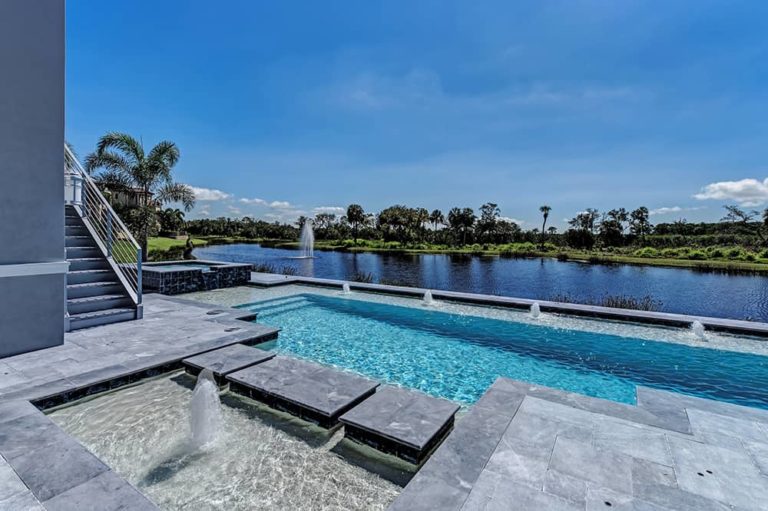
- If you want a freeform design, a natural stone surround, or a pool integrated with an outdoor kitchen, choose an experienced local builder with a strong custom portfolio.
- If you want a standardized fiberglass or vinyl models at a predictable price, a national dealer network can be a reasonable option, as long as you vet the local installer.
- If your lot has steep slopes, rock ledge, or drainage concerns, prioritize a builder with documented experience in your specific county.
- If ongoing maintenance support matters to you, choose a company that handles openings, closings, and repairs in-house.
7 Mistakes to Avoid When Hiring a Pool Builder in PA
- Skipping the registration check. Search the contractor’s Home Improvement Contractor number on the Attorney General’s website before your first meeting.
- Comparing quotes that aren’t equal. One bid may include decking, fencing, and electrical work while another leaves them out. Line up the scope item by item.
- Ignoring who does the work. Ask whether excavation, plumbing, and finishing are handled by employees or subcontractors.
- Paying too much upfront. Large deposits before work begins put your money at risk and may conflict with state rules.
- Accepting vague warranties. Get structural, equipment, and workmanship warranties in writing, with clear terms for each.
- Overlooking winterization. Pennsylvania winters are hard on pools. Ask how the builder handles closing, freeze protection, and spring startup.
- Relying on a single review site. Read verified client feedback from across Pennsylvania across Google, the Better Business Bureau, and local community groups, focusing on how the company handled problems.
Do / Don’t Checklist for Choosing a Builder
Do:
- Tour a recently finished project the builder installed in your area
- Request proof of liability insurance and workers’ compensation coverage
- Ask who pulls permits and schedules inspections
- Get a written project timeline with milestone-based payments
Don’t:
- Sign the same day as a high-pressure sales visit
- Assume a national brand name guarantees a skilled local crew
- Let the builder start digging before permits are approved
- Ignore complaints about communication, even if the finished pools look great
How to Vet Local Pool Installation Experts: Step by Step
- Build a shortlist. Search for inground pool companies near me and collect four to six names with consistent recent reviews.
- Verify registration and insurance. Confirm each company’s HIC number and request current insurance certificates.
- Schedule site visits. A qualified builder should evaluate your yard’s access, slope, soil, and utilities in person before quoting.
- Compare detailed proposals. Review the scope, materials, equipment brands, payment schedule, and timeline side by side.
- Call references. Ask past clients about schedule delays, cleanup, and how warranty issues were handled.
- Review the contract carefully. Check for the registration number, cancellation rights, warranty terms, and a clear change-order process.
- Confirm the schedule. Lock in excavation timing, keeping Pennsylvania’s building season and permit lead times in mind.
A Lancaster County Backyard
A family in Lancaster County with a sloped backyard and clay-heavy soil. They received two quotes for residential pool installation services: one from a national dealer offering a fiberglass package, and one from a local custom builder.
The national package looked cheaper at first. On closer review, it excluded the retaining wall, drainage work, and patio needed for their slope. The local builder had built several pools in the same township, flagged the drainage issue during the site visit, and included a plan to manage runoff.
After lining up the scopes, the family found the true costs were much closer than expected. They chose the local firm because it accounted for site conditions upfront and handled permits directly with the township. The lesson: compare the full scope, not the headline price.
Quick Answers:
Are local pool builders better than national chains in Pennsylvania?
A: Often, yes, especially for custom designs or challenging lots. Local builders usually know regional soil, frost, and permit requirements better, though quality varies by company.
Do pool builders need a license in Pennsylvania?
A: Pennsylvania has no statewide pool builder license. Most must register as home improvement contractors with the Attorney General, and some municipalities require local licenses.
How do I check if a pool contractor is registered in PA?
A: Search the contractor’s name or HIC number on the Pennsylvania Office of Attorney General website.
When is the best time to build a pool in Pennsylvania?
A: Many homeowners plan in winter and build from spring through fall, when ground conditions allow excavation. Booking early helps secure a spot before peak season.
Do national pool chains use local subcontractors?
A: Many do. Franchise and dealer models often rely on regional crews, so ask who will perform each phase of the work.
What should a pool construction contract include?
A: It should include the contractor’s registration number, full scope, materials, payment schedule, timeline, warranty terms, and your cancellation rights.
How do I find the best inground pool contractors in PA?
A: Compare recent reviews, verify registration and insurance, visit completed projects, and request detailed written proposals from several builders.
Do I need a permit for an inground pool in Pennsylvania?
A: Yes, in nearly all cases. Your local code office handles permits, inspections, and safety barrier requirements.
Glossary of Terms
HIC Number: A Home Improvement Contractor registration number issued by the Pennsylvania Office of Attorney General. It shows the contractor is registered under state consumer protection law.
Uniform Construction Code (UCC): Pennsylvania’s statewide building code, enforced by local municipalities. It governs permits and inspections for pools and other construction.
Gunite: A concrete mixture sprayed over a steel framework to form the shell of a custom concrete pool. It allows nearly any shape or size.
Winterization: The process of preparing a pool for freezing temperatures, including lowering water, clearing lines, and protecting equipment.
Conclusion
Choosing between local pool builders and national chains comes down to fit. Local firms tend to win on customization, site knowledge, and direct accountability. National chains can offer predictable packages and brand-backed warranties, but the installation still depends on the crew in your yard.
Whichever route you take, verify registration, compare full scopes, read reviews carefully, and get everything in writing. Ready to start? Book your complimentary property assessment with a registered local pool builder this season and get a detailed proposal built around your yard, not a catalog.