Key Takeaways
- Fiberglass is often the best inground pool type for Pennsylvania’s freeze-thaw winters.
- Concrete pools offer unlimited design freedom but need the most long-term maintenance.
- Vinyl liner pools cost the least upfront but need periodic liner replacements.
- Proper winterizing matters more than pool type for preventing cold-weather damage.
- Pennsylvania home improvement contractors must register with the state Attorney General’s office.
- Soil, drainage, and site access can rule out some pool types before design begins.
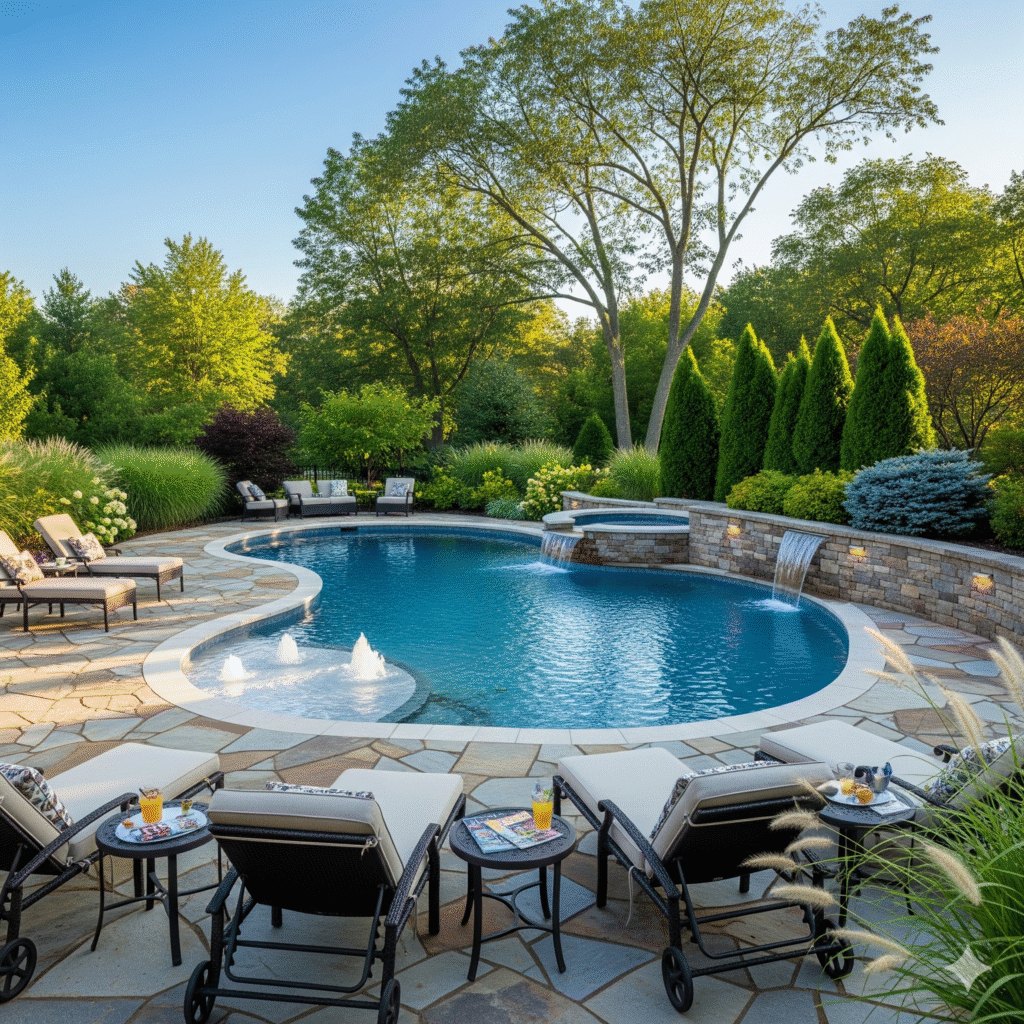
Pennsylvania pools work harder than pools in Florida or Arizona. They sit through months of freezing temperatures, repeated freeze-thaw cycles, heavy spring rain, and then humid summers that push water chemistry to its limits. Choosing the best inground pool type for Pennsylvania means picking a pool that survives all four seasons, not just the three months you swim in it.
This guide compares the three main inground pool types side by side. You’ll learn how each one handles cold weather, what it costs to own over time, which mistakes to avoid, and how to vet professional pool contractors in PA before you sign anything.
Why Pennsylvania Weather Changes the Decision
Most of Pennsylvania sees cold winters with regular freeze-thaw cycles, according to National Weather Service climate records. Water that seeps into small cracks freezes, expands, and widens those cracks over time. That process affects pool surfaces, tile lines, coping, plumbing, and surrounding patios.
Soil adds another variable. Parts of the state have heavy clay, rocky ground, or a high water table. These conditions create pressure on the pool shell from the outside, which matters most in early spring when the ground is saturated. Learning about preparing your yard for difficult soil conditions is essential before breaking ground.
The right pool type reduces cold-weather risk, but no pool type removes it. Installation quality and winterizing habits carry just as much weight.
The Three Inground Pool Types Explained
Fiberglass Pools
A fiberglass pool is a single factory-molded shell that is delivered by truck and set into a prepared excavation. The surface is a smooth gelcoat that resists algae and feels soft underfoot.
Because the shell flexes slightly, fiberglass tends to handle ground movement from freezing and thawing better than rigid surfaces. Shell sizes are limited by what can legally travel on highways, so very large or unusual shapes are not an option. For a deeper look at how fiberglass compares to gunite in Pennsylvania, understanding the structural differences is key.
Pros vs. Cons: Fiberglass
| Pros | Cons |
|---|---|
| Handles freeze-thaw movement well | Limited shapes and sizes |
| Non-porous surface needs fewer chemicals | Higher upfront cost than vinyl |
| Fast installation compared to concrete | Requires crane access to the backyard |
| No liner or resurfacing cycles | Gelcoat repairs need a specialist |
Concrete (Gunite or Shotcrete) Pools
Concrete pools are built on site. Crews form a steel rebar frame, spray concrete over it, and finish the interior with plaster, aggregate, or tile. This is the only option for true custom inground pool construction, including vanishing edges, attached spas, and odd-shaped lots.
The tradeoff is maintenance. Plaster surfaces are porous, so they need more brushing and chemical balancing. Over the years, the interior needs resurfacing, and tile lines need extra protection during freezing weather.
Pros vs. Cons: Concrete
| Pros | Cons |
|---|---|
| Unlimited shapes, sizes, and depths | Longest installation timeline |
| Very strong and long-lasting structure | Porous surface needs more chemicals |
| Best fit for luxury and custom features | Periodic resurfacing adds lifetime cost |
| Works on difficult or sloped lots | Tile and coping vulnerable to freeze damage |
Vinyl Liner Pools
Vinyl liner pools use steel or polymer walls with a custom-fitted vinyl liner as the interior surface. They usually have the lowest upfront cost of the three types.
Liners can tear, fade, or wrinkle, and they need replacing periodically. In winter, the water itself helps hold the liner in place, so vinyl pools should never be fully drained.
Side-by-Side Comparison Table
| Factor | Fiberglass | Concrete | Vinyl Liner |
|---|---|---|---|
| Freeze-thaw tolerance | Strong | Good with proper care | Good with proper water level |
| Upfront cost | Mid to high | Highest | Lowest |
| Long-term maintenance | Lowest | Highest | Moderate |
| Design flexibility | Limited to molds | Fully custom | Moderate |
| Installation time | Fastest | Slowest | Moderate |
| Recurring big expense | Rare | Resurfacing | Liner replacement |
| Best for | Low-maintenance owners | Luxury and custom builds | Budget-focused families |
For detailed pricing breakdowns across all three types, review our guide on realistic inground pool costs in Pennsylvania.
Which Pool Type Fits Your Situation?
The best inground pool type for Pennsylvania depends on your priorities. Use these rules of thumb:
- If you want the lowest maintenance and fastest install, choose fiberglass. It suits busy families who want to swim, not scrub.
- If you need a custom shape, a large size, or luxury features, choose concrete. Nothing else offers the same design freedom.
- If your budget is the main constraint, choose vinyl. Just plan ahead for future liner replacements.
- If your backyard has no crane access, fiberglass may be off the table. Concrete or vinyl can be built with smaller equipment.
- If your lot has a high water table, ask about hydrostatic relief valves and drainage plans. This applies to every pool type.
7 Mistakes to Avoid When Choosing an Inground Pool in Pennsylvania
- Choosing on upfront price alone. A cheaper build can cost more over 20 years once resurfacing or liner replacements are added in.
- Ignoring soil and drainage. A site evaluation should come before any design talk.
- Skipping permits. Understanding local permit requirements for pools prevents costly delays and code violations.
- Hiring an unregistered contractor. Always verify your pool builder’s license through the Office of Attorney General.
- Planning only for summer. Ask how the builder protects tile, coping, and plumbing through winter.
- Forgetting the decking. Concrete patios around the pool face the same freeze-thaw stress and need proper joints and drainage.
- Not reading reviews. Before signing, read verified customer reviews to see how companies handle warranties and communication.
How to Hire the Right Pool Contractor: Step by Step
Searching for “inground pool companies near me” gives you plenty of names. Narrowing them down takes a process:
- Verify registration. Look up the contractor on the Pennsylvania Attorney General’s Home Improvement Contractor registration search.
- Confirm insurance. Ask for proof of general liability and workers’ compensation coverage.
- Check local permitting. Licensed pool builders in Pennsylvania should know your township’s rules and pull permits themselves.
- Read reviews across platforms. Look at Google, the Better Business Bureau, and local community groups, not just testimonials on the builder’s site.
- Ask about winter service. The best inground pool contractors in PA offer closing, opening, or at least clear winterizing guidance.
- Compare written quotes. Make sure each quote covers excavation, decking, equipment, electrical, and fencing so you’re comparing the same scope.
- Review the warranty. Understand what covers the structure, the surface, and the equipment separately.
Winterizing Do’s and Don’ts
Winter care protects your investment more than any material choice. Follow proper winterizing steps for PA pools alongside industry-standard maintenance guidelines from the PHTA.
Do:
- Blow out plumbing lines and add pool-grade antifreeze.
- Lower the water level below the skimmer and tile line.
- Use a properly fitted safety cover.
- Balance the water chemistry before closing.
Don’t:
- Drain a vinyl or fiberglass pool completely.
- Leave water standing in pumps, filters, or heaters.
- Let leaves and debris pile up on the cover all winter.
- Use a flimsy tarp in place of a real safety cover.
A Lehigh Valley Family’s Decision
A family in the Lehigh Valley wanted a pool for two young kids. Both parents worked full time and had no interest in weekly brushing. Their backyard had good side access, and their budget sat in the middle range.
After a site visit, their builder recommended a mid-size fiberglass pool with a safety cover. Concrete was ruled out because of upkeep, and vinyl was ruled out because they didn’t want a future liner replacement. For their priorities, fiberglass was the clear fit.
A neighbor two streets over chose concrete for the opposite reason: a sloped yard and a wish list that included a spa and a sun shelf. Same weather, different answer. That’s why a site visit matters.
Quick Answers:
What is the best inground pool type for Pennsylvania?
A: For most homeowners, fiberglass is the best fit because it tolerates freeze-thaw cycles and needs little maintenance. Concrete is better for custom designs, and vinyl suits smaller budgets.
Do inground pools crack in Pennsylvania winters?
A: They can if they aren’t winterized properly. Water left in tile lines, plumbing, or small surface cracks can freeze and expand.
Should I drain my pool for the winter in Pennsylvania?
A: No. Lower the water below the skimmer, but keep the pool mostly full to protect the shell and liner.
Do pool builders need a license in Pennsylvania?
A: Pennsylvania requires most home improvement contractors to register with the Office of Attorney General under the PA Home Improvement Consumer Protection Act. Some municipalities have additional local licensing rules.
When is the best time to build a pool in Pennsylvania?
A: Many homeowners sign contracts in fall or winter so construction can start as soon as the ground allows in spring.
Is fiberglass or concrete better for cold climates?
A: Fiberglass generally handles ground movement better, while concrete is strong but needs extra care for tile and plaster in freezing weather.
How long does inground pool installation take?
A: Fiberglass is usually the fastest, vinyl is moderate, and concrete takes the longest. Weather, permits, and site conditions all affect timing.
Do I need a fence around my pool in Pennsylvania?
A: Yes. Pennsylvania’s building code requires barriers around residential pools, and local rules may add specific requirements.
Glossary of Terms
- Freeze-thaw cycle: Repeated freezing and melting of water in the ground or materials, which can cause cracking and shifting.
- Gelcoat: The smooth, colored finish on a fiberglass pool shell that resists stains and algae.
- Shotcrete: Concrete sprayed through a hose onto a rebar frame to form the walls and floor of a custom pool. Gunite is a similar dry-mix version.
- Hydrostatic relief valve: A valve in the pool floor that lets groundwater in to relieve pressure, protecting the shell from being pushed up.

Conclusion
There’s no single winner for every yard, but the pattern is clear. Fiberglass is the best inground pool type for Pennsylvania homeowners who want durability and low maintenance. Concrete wins for custom, high-end builds. Vinyl remains a smart choice when upfront cost leads the decision.
Whatever you choose, the builder matters as much as the material. Work with registered, insured, local pool installation experts who understand Pennsylvania soil, permits, and winters.
Ready to find the right pool for your yard? Schedule your free design consultation with our team and get a design recommendation built around your property, budget, and lifestyle.