Key Takeaways
- Concrete vs vinyl liner pools differ most in upfront cost, lifespan, and maintenance rhythm.
- Vinyl liners flex with freeze-thaw movement, a real advantage in Pennsylvania winters.
- Concrete shells last decades but need resurfacing and more aggressive chemical balancing.
- Soil type, water table, and lot access often decide the pool type before budget does.
- Verify licensing, insurance, and local references before hiring any pool contractor.
- Total cost of ownership over 20 years matters more than the initial quote.
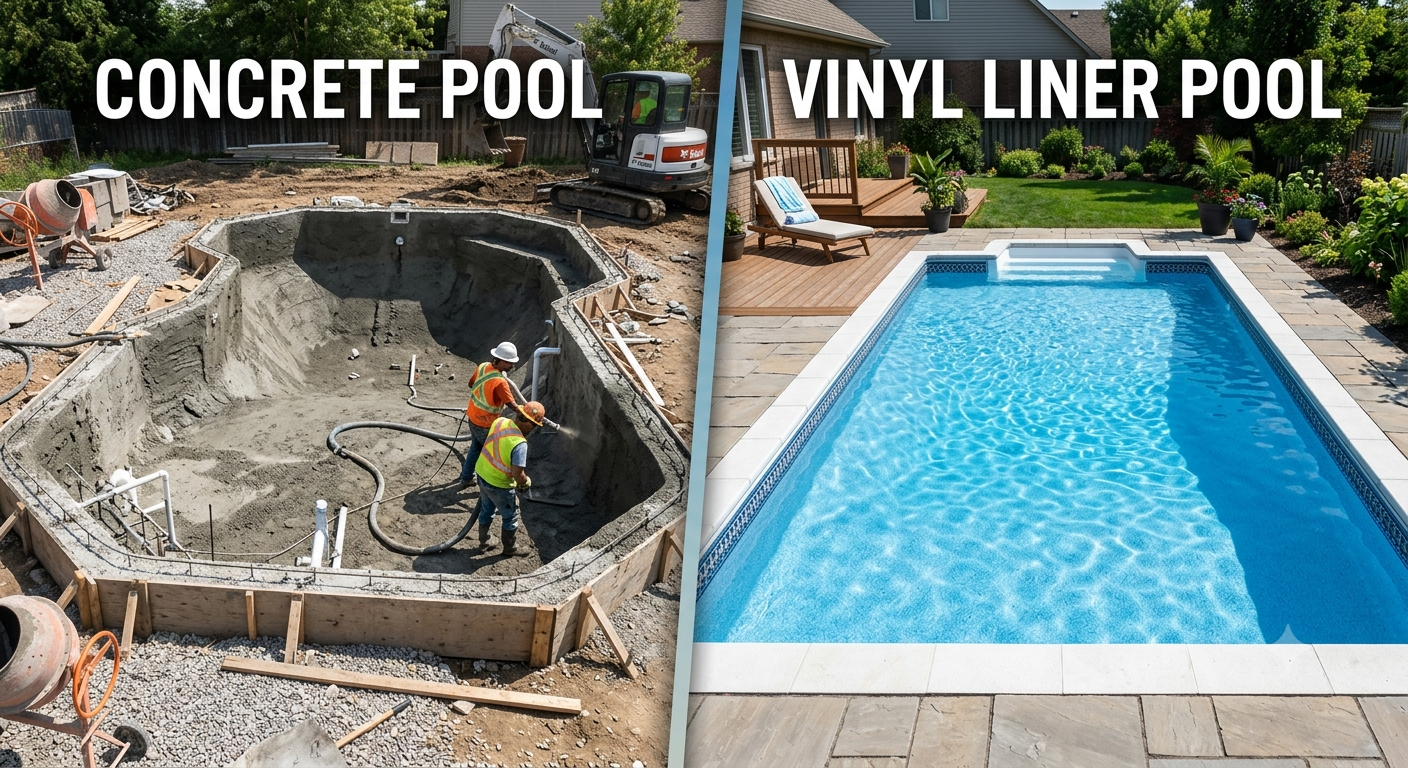
Choosing between concrete vs vinyl liner pools is the single biggest decision a Pennsylvania homeowner makes during a backyard project. It drives the price, the construction timeline, the shape of the finished pool, and what you will spend maintaining it a decade from now.
Most comparison guides are written for national audiences and ignore the one variable that matters most in this state: freeze-thaw. Pennsylvania backyards go through repeated freezing and thawing every winter, and the two pool types respond to that stress very differently.
This guide breaks down cost, durability, maintenance, and resale impact with Pennsylvania conditions in mind. You will also get a step-by-step selection process, a side-by-side comparison table, and seven mistakes that cause the most expensive regrets.
How Each Pool Type Is Actually Built
Concrete Pools (Gunite and Shotcrete)
A concrete pool starts as an excavated hole reinforced with a steel rebar grid. Crews spray a concrete mixture over that grid under high pressure, then finish the surface with plaster, aggregate, or tile.
The result is a rigid, monolithic shell bonded to the ground. It can be built in any shape, at any depth, with attached spas, tanning ledges, vanishing edges, or custom steps.
Curing takes time. Most concrete builds run an eight to sixteen-week timeline depending on weather, inspections, and finish complexity. In Pennsylvania, a project started in late fall often does not fill until spring.
Vinyl Liner Pools
A vinyl liner pool uses a structural wall system, usually galvanized steel or polymer panels, set on a concrete footer. A troweled base of vermiculite or grout forms the floor, and a custom-fitted vinyl membrane is stretched across the entire interior and locked into a track at the top.
The liner is the waterproof barrier. The walls provide structure but never touch the water directly.
Installation is significantly faster. Many vinyl liner projects finish in three to six weeks, which is why they dominate shorter Pennsylvania build seasons.
Concrete vs Vinyl Liner Pools: Side-by-Side Comparison
| Factor | Concrete Pool | Vinyl Liner Pool |
|---|---|---|
| Upfront cost | Higher | Lower |
| Build time | 8 to 16 weeks | 3 to 6 weeks |
| Expected structural lifespan | Several decades | 20 plus years for walls |
| Recurring major cost | Resurfacing every 10 to 15 years | Liner replacement every 7 to 12 years |
| Shape flexibility | Unlimited custom shapes | Limited to panel configurations |
| Surface feel | Textured, can be abrasive | Smooth and soft underfoot |
| Chemical demand | Higher, plaster raises pH | Lower, liner is chemically inert |
| Algae resistance | Porous surface holds algae | Non-porous, easier to brush clean |
| Freeze-thaw tolerance | Rigid, cracks under ground movement | Flexes with movement |
| Repair complexity | Specialized crews required | Patches and replacements are routine |
| Resale perception | Premium, luxury signal | Practical, family friendly |
The Pennsylvania Freeze-Thaw Factor
This is where the national advice falls apart.
Pennsylvania soil absorbs water in fall, freezes in winter, and expands. When it thaws, it settles. That cycle repeats for months and applies constant pressure against anything buried in the ground.
Concrete resists that pressure by being rigid. When ground movement exceeds what the shell can absorb, the result is hairline cracking in the plaster or, in worse cases, structural cracking that requires professional repair. Proper engineering, adequate rebar, correct footer depth below the frost line, and good drainage all reduce this risk substantially. Poorly engineered shells fail first.
Vinyl liners take a different approach. The membrane flexes. Steel or polymer walls have a small amount of give, and the liner itself moves with minor shifts rather than fighting them. This is a genuine advantage in northern climates.
Cold water does shrink vinyl slightly, which is why proper winterization matters more with liner pools. Draining too far below the skimmer, letting the water level drop over winter, or using an ill-fitting cover can pull a liner out of its track.
The Pool & Hot Tab Alliance publishes industry-standard safety and construction codes that address regional climate conditions, and Penn State Extension’s regional soil resources provides useful guidance on regional soil behavior and drainage. Both are worth reviewing before you finalize a design.
Cost Over Time, Not Cost on Day One
The quote you sign is only part of the picture.
Vinyl liner pools have lower upfront construction costs. The tradeoff is a scheduled replacement expense. Liners wear from UV exposure, chemical contact, and normal use. Industry experts generally place liner life somewhere in the seven to twelve year range, with careful chemistry and a quality cover pushing it toward the upper end.
Concrete pools cost more upfront. In exchange you get a shell that can outlast the house note. But plaster is not permanent. Resurfacing typically comes due somewhere in the ten to fifteen year window, and it is a larger single expense than a liner swap.
Concrete also runs a higher ongoing chemical bill. Plaster is alkaline and continuously raises pH, meaning more acid, more testing, and more attention. The porous surface also gives algae a foothold, so brushing is a real chore rather than an occasional one.
Vinyl is chemically inert. It does not push your pH around, and the smooth surface resists algae adhesion. Many homeowners report noticeably lower routine maintenance effort with liner pools.
The U.S. Department of Energy publishes federal guidelines on pool energy efficiency that applies to both types, and the biggest lever in either case is a quality cover, not the pool material.
Pros and Cons
Concrete Pools
Pros
- Fully custom shapes, depths, and features
- Longest structural lifespan of any pool type
- Premium finishes like pebble, quartz, and tile
- Strong resale signal on higher-end properties
- No membrane to puncture or replace
Cons
- Highest upfront cost
- Longest construction timeline
- Rough surface on feet and swimsuits
- Higher chemical and brushing demand
- Cracks require specialized repair crews
Vinyl Liner Pools
Pros
- Lower entry cost for the same water volume
- Fast installation, often within a single season
- Smooth, comfortable surface
- Lower chemical consumption and easier cleaning
- Flexes with freeze-thaw ground movement
Cons
- Liner replacement is a recurring expense
- Sharp objects and pet claws can puncture the membrane
- Shape options limited by panel systems
- Liner patterns fade with sun exposure over time
- Correct winterization procedures are critical to prevent track slippage
How to Choose: A Step-by-Step Process
- Set a long-term ownership budget, not a purchase price. Add the build cost plus two liner replacements, or one resurfacing plus higher annual chemical spend. Compare those totals honestly.
- Get your soil tested. Expansive clay, high water tables, and shallow bedrock all change what is buildable. This step alone rules out options on many Pennsylvania lots.
- Measure your access. Concrete pools need room for shotcrete equipment. Narrow side yards and mature trees can eliminate a design before it is drawn.
- Define your must-have features. Attached spa, vanishing edge, or a specific freeform shape points toward concrete. A rectangle with a tanning ledge is well within vinyl capability.
- Decide your timeline. If you want to swim this summer, a vinyl build is realistic. Concrete usually means planning a season ahead.
- Vet three builders. Verify contractor licensing, insurance, warranty terms, and a subcontractor list. Read verified customer feedback across multiple platforms rather than trusting a single page.
- Visit finished projects. Ask each contractor for addresses of pools built five or more years ago in your township. New pools all look good. Five-year-old pools tell the truth.
Do and Don’t
Do
- Confirm the footer is engineered below the local frost line
- Insist on a written winterization plan before closing season one
- Ask specifically what the warranty excludes, not what it covers
- Budget for the deck, fencing, and landscaping as part of the project
- Check that your builder pulls the permit rather than asking you to
Don’t
- Choose based on the lowest bid without comparing scope line by line
- Assume a concrete pool is maintenance free because it has no liner
- Drain a vinyl pool below the skimmer over winter
- Skip a quality cover to save money, it is the highest-return accessory you can buy
- Sign before you have seen the excavation and equipment plan in writing
Conditional Guidance
If your property has shifting clay soil or a history of settling, a vinyl liner pool is usually the safer structural bet because the system tolerates movement instead of resisting it.
If you want an attached spa, a vanishing edge, or a genuinely freeform shape, concrete is the only option that delivers it without compromise.
If you plan to sell within five to seven years, vinyl recovers more of your investment relative to what you spent, since you avoid the premium build cost while still adding a functioning pool.
If this is your forever home and you swim year after year, concrete amortizes better across a thirty-year horizon.
A Bucks County Comparison
Two neighbors on the same street install pools in the same spring.
The first chooses a custom concrete pool with an attached spa and pebble finish. Construction runs fourteen weeks, pushing the first swim into August. The finished result is a showpiece that anchors the backyard. Over the next decade the owner spends more on chemicals and brushing, and plans for resurfacing around year twelve.
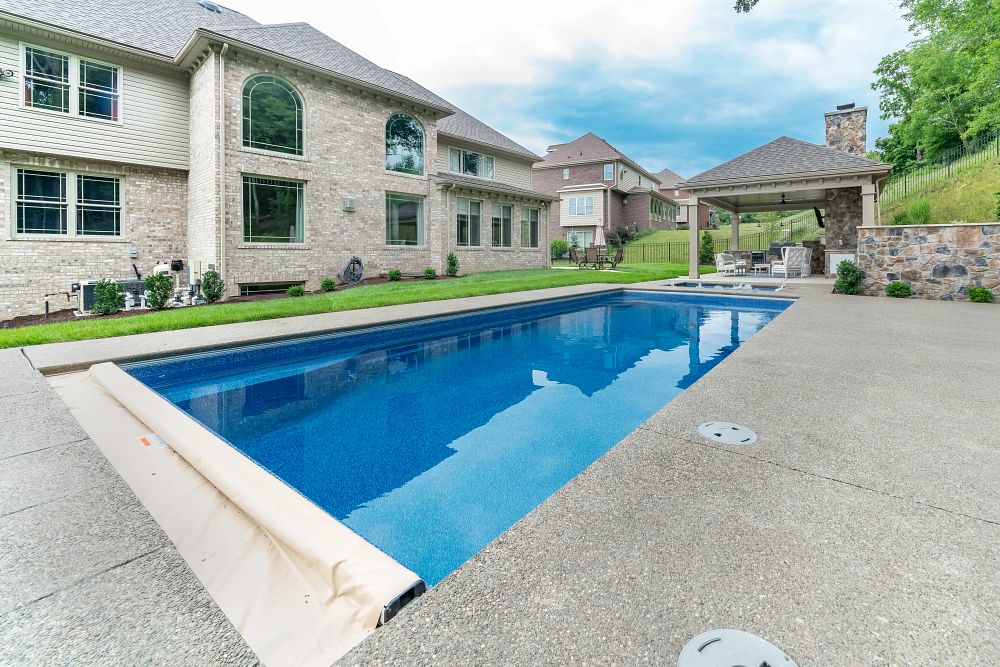
The second chooses a rectangular vinyl liner pool with a tanning ledge and automatic cover. The build takes five weeks and the family swims by early June. Maintenance is lighter throughout. The liner is replaced in year nine at a fraction of what resurfacing costs.
Neither made a mistake. The concrete owner prioritized design and permanence. The vinyl owner prioritized speed, budget, and simplicity. The lesson is that the correct answer in the concrete vs vinyl liner pools debate depends entirely on which of those things you value.
7 Mistakes to Avoid
- Comparing quotes without comparing scope
- Ignoring soil and drainage conditions before design
- Forgetting to budget for decking, fencing, and landscaping
- Hiring a contractor without verifying current licensing and insurance
- Skipping a quality cover to save money in year one
- Winterizing incorrectly, especially with vinyl liner pools
- Choosing a pool type based on a neighbor’s build rather than your own lot
Quick Answers:
Which lasts longer, concrete or vinyl liner pools?
A: Concrete shells last longer structurally, often several decades. Vinyl walls also last twenty plus years, but when comparing all major pool materials, the liner itself needs replacement roughly every seven to twelve years.
Are vinyl liner pools a bad idea in Pennsylvania winters?
A: No. Vinyl actually handles freeze-thaw movement well because the system flexes. The key is proper winterization and maintaining the correct water level.
Do concrete pools crack in cold climates?
A: They can if the shell is under-engineered or drainage is poor. Correct footer depth, adequate rebar, and proper grading substantially reduce that risk.
Which pool type is cheaper to maintain?
A: Vinyl liner pools generally cost less to maintain year to year, since the liner is chemically inert and does not raise pH the way plaster does.
How long does each type take to build?
A: Vinyl liner pools typically finish in three to six weeks. Concrete pools usually take eight to sixteen weeks depending on finish and weather.
Can you convert a vinyl pool to concrete later?
A: It is technically possible but rarely economical. Most builders recommend choosing correctly upfront rather than planning a conversion.
Does a pool increase home value in Pennsylvania?
A: It can, particularly in warmer southeastern counties with longer swim seasons. Value recovery varies by neighborhood and buyer expectations.
What should I check before hiring a pool contractor?
A: Verify licensing, general liability and workers compensation insurance, written warranty terms, permit responsibility, and references from projects at least five years old.
Glossary of Terms
Gunite
A dry concrete mixture combined with water at the nozzle and sprayed under pressure to form a pool shell. It is the most common concrete pool construction method in the United States.
Frost Line
The maximum depth at which soil freezes in a given region. Footers must be poured below this depth to prevent structural movement from freeze-thaw cycles.
Liner Track
The channel at the top of a vinyl pool wall that grips and holds the liner in place. A liner that slips out of this track will need professional reinstallation.
Plaster Resurfacing
The process of removing and reapplying the interior finish on a concrete pool. It is a recurring major expense typically due every ten to fifteen years.
Conclusion
There is no universally correct answer in the concrete vs vinyl liner pools comparison. There is only the answer that fits your lot, your budget horizon, and how you actually plan to use the space.
Vinyl wins on speed, upfront cost, comfort, maintenance simplicity, and freeze-thaw tolerance. Concrete wins on design freedom, structural longevity, premium finishes, and long-term amortization.
What sinks projects is not choosing the wrong material. It is choosing without testing the soil, without comparing scope, and without verifying who is actually doing the work.
Ready to find out which pool your property can support? Schedule your complimentary site evaluation from a licensed Pennsylvania pool builder and get a written scope comparison before you commit to either option.