For many homeowners, the thought of using Muriatic Acid for Pools brings up a specific moment of dread. You pull back the cover after a long winter, or perhaps you just tested the water after a heavy thunderstorm, and the results are confusing. Your pH is skyrocketing. The water looks a bit murky, and you want to troubleshoot cloudy pool water fast. You know you need to fix it, but the solution involves one of the most intimidating chemicals in your shed.
Handling powerful chemicals can feel unnerving. It is not just about dumping liquids into the water; it is about chemistry, precision, and, most importantly, safety.
In this guide, we are going to demystify muriatic acid. You will learn exactly what it is, why it is the secret weapon for crystal-clear water, and how to handle it with the confidence of a pro. We will break down essential pool chemical safety so you can focus on enjoying your custom backyard oasis rather than worrying about what is in the water.
What Is Muriatic Acid?
Muriatic acid is a less pure form of hydrochloric acid. It is a strong, corrosive acid that is widely used in the swimming pool industry.
While it sounds intense, it serves a very simple purpose. It lowers the pH and total alkalinity of your pool water. When used correctly, it is highly effective. It is inexpensive. It works fast.
However, because it is a strong acid, it demands respect. It is not the same as adding gentle clarifiers or salt. It can burn skin, damage clothes, and corrode metal if mishandled. That is why understanding the basics is vital before you even unscrew the cap.
Why Do Pools Need Acid?
Pool water is all about maintaining chemical balance. The two main factors we look at are pH and Total Alkalinity.
- pH: This measures how acidic or basic the water is. We want a sweet spot between 7.4 and 7.6.
- Total Alkalinity (TA): This acts as a buffer for the pH, keeping it stable.
When your pH goes too high (above 7.8), chlorine becomes inactive. It stops killing bacteria effectively. High pH can also lead to scaling on your decorative tiles and cloudy water. That is where muriatic acid comes in. It brings those numbers down, restoring the balance so your chlorine can do its job.
Pool Chemical Safety: The Golden Rules
Before we discuss dosages or pouring techniques, we must talk about safety. Pool chemical safety is not optional. Always follow the CDC’s guidelines for pool chemical safety when handling strong acids. Muriatic acid produces fumes that can be irritating to your lungs, and direct contact can cause burns.
Here is your safety checklist. Do not skip these steps.
1. Gear Up Properly
Never handle acid in your swimsuit. You need a barrier between you and the chemical.
- Wear safety goggles. Splashes happen. Protect your eyes.
- Use acid-resistant gloves. typical latex kitchen gloves might not be enough.
- Wear long sleeves and pants. Cover your skin.
- Wear closed-toe shoes. No flip-flops.
2. Location Matters
Always work in a well-ventilated area. If you are opening the bottle, do it outside by the pool, not inside a closed shed or garage. The fumes can build up quickly in enclosed spaces.
3. The “Acid to Water” Rule
This is the most critical rule in chemistry. Always add acid to water. Never add water to acid.
If you add water to a container of acid, it can react violently and splash back at you. When you dilute acid, you must have a bucket of water ready first, then slowly pour the acid into it.
4. Watch the Wind
We get plenty of breezy days here in PA. Before you pour, check the wind direction. Ensure the wind is blowing away from you. You do not want fumes or droplets blowing back into your face.
How to Add Muriatic Acid for Pools: A Step-by-Step Guide
Now that you are safe, let’s get that water balanced. Follow this process to ensure you treat your pool effectively without damaging the surface or equipment.
Step 1: Test Your Water
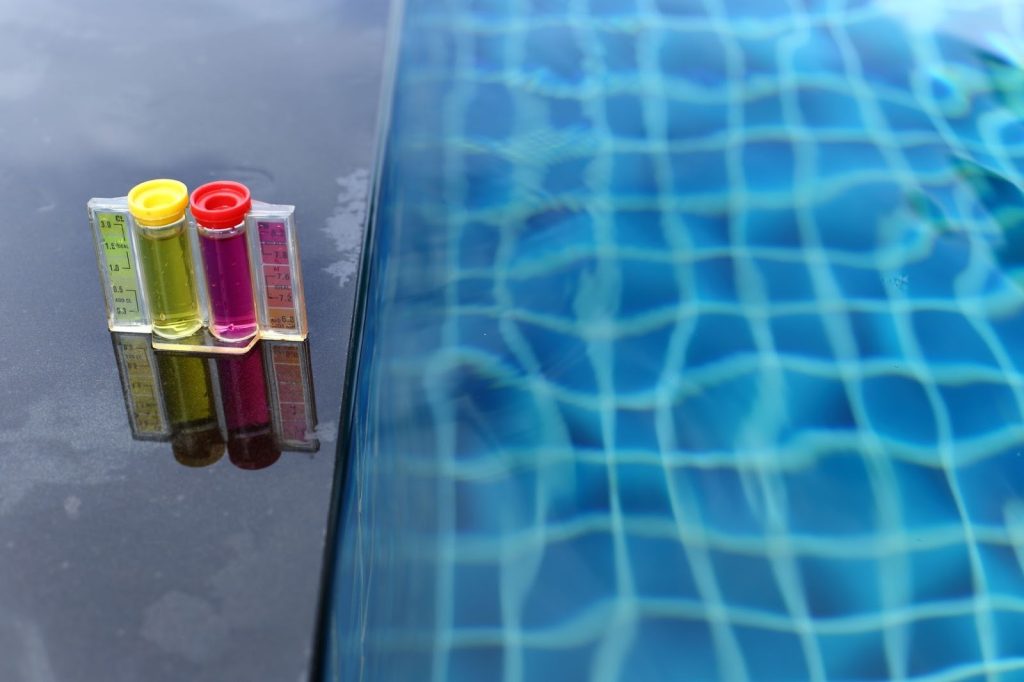
Never guess. You cannot smell or see pH levels. Use a high-quality liquid test kit or take a sample to a local pool store.
- Ideal pH: 7.4 – 7.6
- Ideal Alkalinity: 80 – 120 ppm
If your pH is above 7.8 or your alkalinity is way over 120 ppm, it is time for acid.
Step 2: Calculate the Dosage
Read the label on your bottle of muriatic acid. Most bottles will have a chart.
For example, if you have a 20,000-gallon pool and your pH is 8.0, the label will tell you exactly how many ounces (or quarts) to add to bring it down to 7.6.
Tip: It is always better to add less than you think you need. You can always add more later, but raising pH back up requires different chemicals (like soda ash) and more work.
Step 3: Prepare the Solution
While some pool owners pour directly into the pool, diluting it is safer for your specific pool finish, especially if you have a liner or colored plaster.
- Fill a plastic bucket with pool water.
- Measure the required amount of muriatic acid.
- Slowly pour the acid into the bucket of water.
- Stir gently with a plastic stick (never metal/wood).
Step 4: The Pour
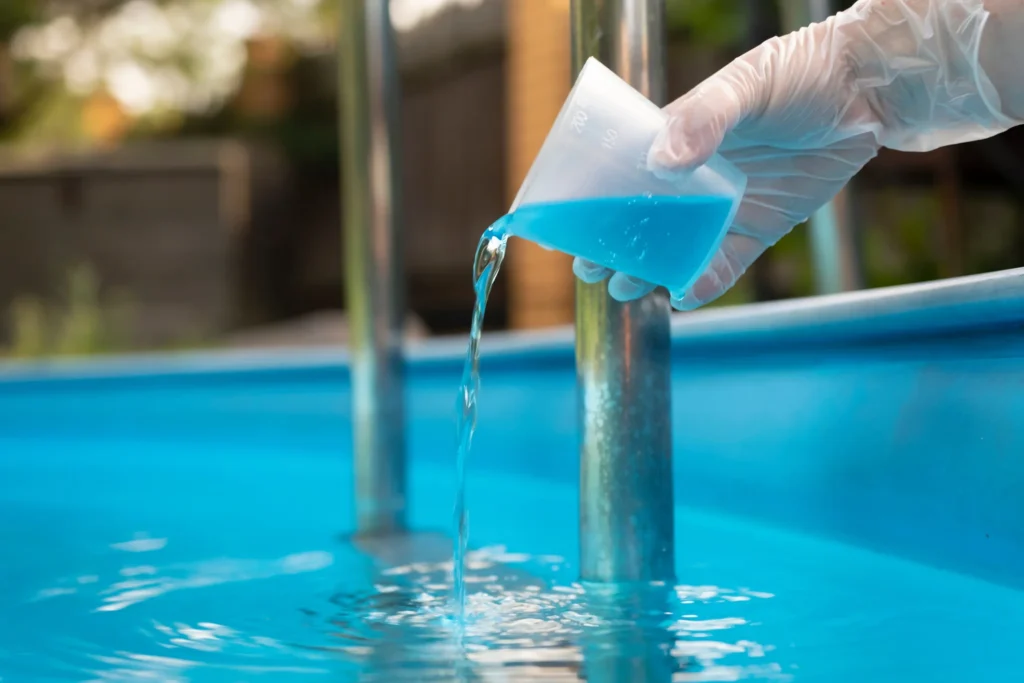
Walk around the perimeter of the deep end of the pool. Pour the mixture slowly into the water.
Do not pour it all in one spot. Spreading it out helps it mix faster and prevents a “hot spot” of acid from eating away at your pool floor.
Note: Make sure your pool pump is running. You need the water circulating to mix the acid thoroughly.
Step 5: Wait and Retest
Let the pump run for at least 30 minutes to an hour. Do not swim yet.
After the water has circulated, test the pH again. If it is still high, repeat the process. If it is in the sweet spot (7.4 to 7.6), you are done.
Muriatic Acid vs. Dry Acid (Sodium Bisulfate)
You might see “Dry Acid” or “pH Decreaser” on the shelf next to the liquid acid. Which one should you choose? Both lower pH, but they have different pros and cons.
Here is a quick comparison to help you decide.
| Feature | Muriatic Acid (Liquid) | Dry Acid (Sodium Bisulfate) |
| Form | Liquid | Granular / Powder |
| Strength | Very Strong | Moderate |
| Cost | Generally Cheaper | More Expensive |
| Ease of Use | Harder (fumes, splashing risk) | Easier (no splashing) |
| Impact on Alkalinity | Lowers it significantly | Lowers it moderately |
| Best For | Large pH adjustments | Small adjustments & Spas |
The Verdict: For most full-sized inground pools in Pennsylvania, Muriatic Acid for Pools is the industry standard because it is cost-effective and powerful. However, if you are uncomfortable handling liquid acid, dry acid is a valid, safer alternative, though it will cost more in the long run.
Common Mistakes to Avoid
Even experienced pool owners make mistakes. Here are a few we see often at Poseidon’s Custom Pools, and how you can avoid them.
Ignoring Total Alkalinity
Some homeowners focus only on pH. If your alkalinity is low, your pH will bounce around like a yo-yo. Acid lowers both. If your alkalinity is already low (below 80 ppm), adding acid will tank it further. You may need to add baking soda (sodium bicarbonate) to raise alkalinity before tackling the pH.
Adding Too Much at Once
We mentioned this, but it bears repeating. Crashing your pH below 7.0 turns your pool water acidic. Acidic water eats everything. It corrodes your heater, destroys rubber seals in your pump, and makes the water sting swimmers’ eyes. Always dose in small increments.
Pouring Over Skimmers or Jets
Do not pour acid directly into the skimmer. This sends highly concentrated acid straight through your expensive pool filtration system before it dilutes. It can cause internal damage that you won’t see until something breaks. Always pour into the deep end of the pool water itself.
Storage Errors
Store your acid in a cool, dry place away from other chemicals. Ensure you follow EPA recommendations for safe chemical storage to prevent accidents.
Critical Warning: Never store muriatic acid near chlorine. If these two mix (even their fumes), they create lethal chlorine gas. Keep them in separate corners of your storage area.
Frequently Asked Questions
How long after adding muriatic acid can I swim?
Generally, you should wait at least 30 minutes to an hour with the pump running. This ensures the acid has mixed completely with the water. If you added a very large dose, wait two hours and retest the water to ensure the pH is safe before jumping in.
Can I use muriatic acid to clean my pool tiles?
Yes, it is excellent for removing calcium scale. However, you must dilute it significantly (usually 1 part acid to 10 parts water). Wear full protective gear. Apply it carefully to the scale, scrub, and rinse. Be careful not to let the concentrated runoff sit on your pool deck.
Does muriatic acid go bad?
It has a long shelf life, roughly five years if the bottle is sealed tight. However, over time, the plastic bottle itself can degrade or become brittle from the fumes. If you have an old bottle from three seasons ago, inspect the container carefully before lifting it.
Why does my pool smell like acid?
If you smell acid, you may have spilled some, or the container is not sealed. In the pool water itself, you should not smell the acid once it is mixed. If the water smells pungent or irritates your nose, check your pH immediately—it might be far too low.
Conclusion
Managing your pool’s chemistry doesn’t have to be a headache. While Muriatic Acid for Pools is a potent chemical, it is also an essential tool for maintaining that sparkling, inviting water we all love during the warm Pennsylvania summers.
By following these safety protocols and respecting the power of the chemicals you use, you protect your family and your investment. Remember, clear water starts with balanced water.
If you are ever unsure about handling chemicals, or if your pool surface is showing signs of scale and wear that chemicals just won’t fix, we are here to help. At Poseidon’s Custom Pools, we specialize in making backyards beautiful and functional. Whether you need advice on major pool renovations or a complete backyard transformation, reach out to us.
Ready to upgrade your backyard experience? Contact Poseidon’s Custom Pools today and let’s make your pool the envy of the neighborhood.