Key Takeaways
- The gunite vs fiberglass pools Pennsylvania decision comes down to yard access, budget, and shape flexibility.
- Gunite suits sloped lots, custom shapes, and depths beyond standard fiberglass limits.
- Fiberglass installs faster, often in weeks rather than months, with far less site disruption.
- Both perform well in PA winters when the builder handles drainage and hydrostatic pressure correctly.
- Lifetime cost matters more than sticker price. Compare resurfacing and chemical spend, not just install quotes.
- Verify licensing, insurance, and permit history before you sign with any pool contractor.
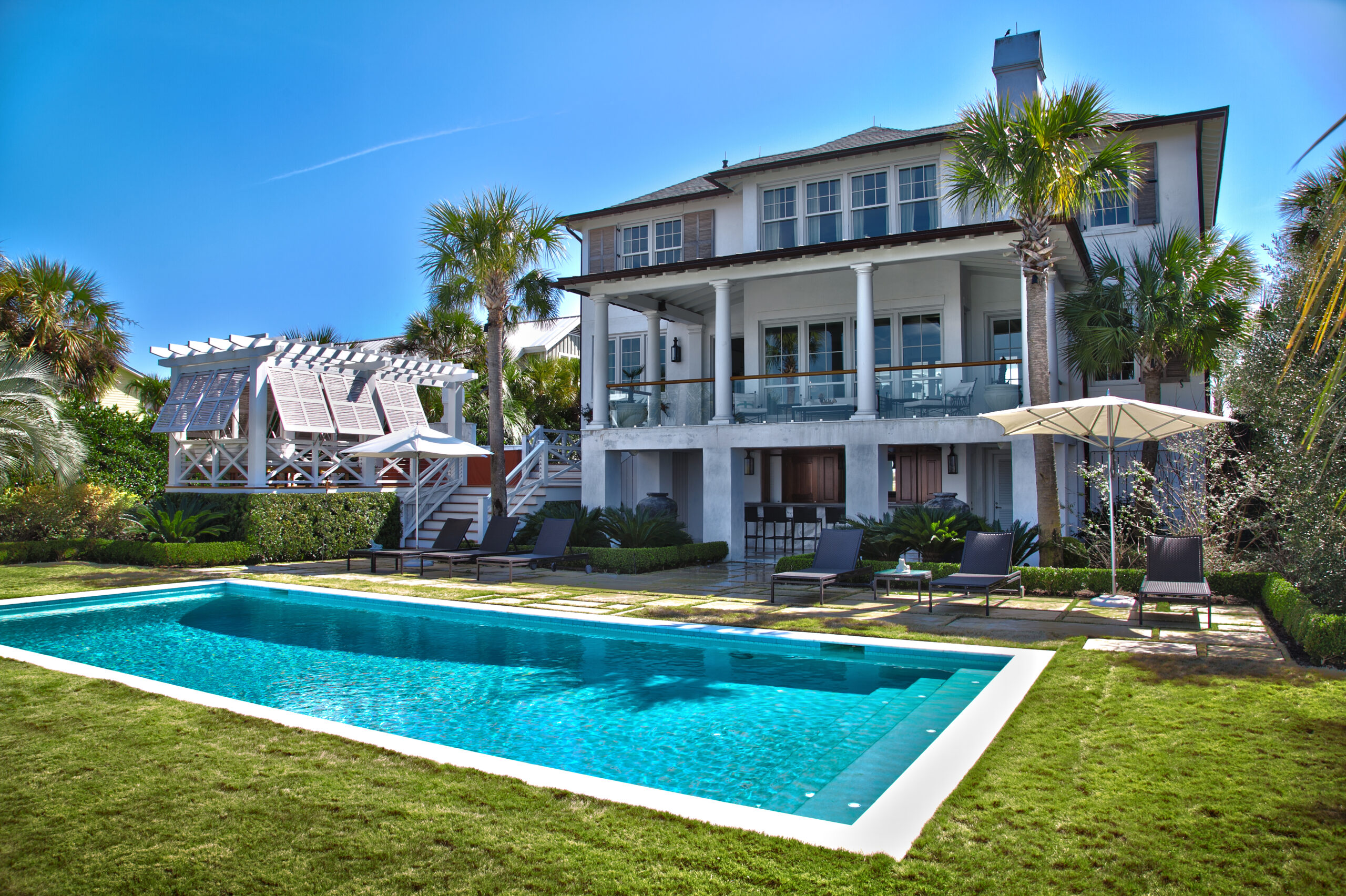
Choosing between gunite vs fiberglass pools in Pennsylvania is not just an aesthetic call. It affects your permit timeline, how long your yard stays torn up, what you spend on chemicals every summer, and how the shell holds up after fifteen Pennsylvania winters.
Most homeowners get pitched one option because that is what the contractor in front of them installs. That is a sales preference, not an engineering recommendation.
This guide breaks down how both pool types actually behave in Pennsylvania soil and climate, what each one really costs over time, and the seven mistakes that turn a good pool project into an expensive regret. By the end you will know which shell type fits your property, and key questions to ask licensed pool builders in Pennsylvania before you write a deposit check.
What Gunite and Fiberglass Pools Actually Are
Gunite is a dry mix of cement and sand shot through a hose and hydrated at the nozzle. It is sprayed over a steel rebar cage shaped to your design, then finished with plaster, aggregate, or tile. The pool is built in place, so the shape is limited only by your imagination and your lot.
Fiberglass pools arrive as a single molded shell built in a factory. The crew excavates, sets a compacted base, lowers the shell with a crane, backfills, and plumbs it. The gel coat surface is finished before it ever reaches your driveway.
That single difference, built on site versus built in a factory, drives almost every other tradeoff below.
Head-to-Head Comparison
| Factor | Gunite | Fiberglass |
|---|---|---|
| Typical install time | Two to four months | Two to five weeks |
| Shape and size options | Fully custom, any depth | Limited to manufacturer molds |
| Width limitation | None | Restricted by road transport width |
| Surface texture | Slightly rough, varies by finish | Smooth gel coat |
| Interior refinishing | Resurfacing needed periodically | Gel coat repair or refinish, less frequent |
| Chemical demand | Higher, plaster is porous and alkaline | Lower, non-porous surface |
| Algae resistance | Moderate | High |
| Salt system compatibility | Yes, with correct finish | Excellent |
| Site access needed | Standard excavation access | Crane access required |
| Repair complexity | Patchable by most builders | Specialist required for structural cracks |
| Resale perception in PA | Strong, seen as premium | Strong, seen as low-maintenance |
How Pennsylvania Weather Changes the Math
Pennsylvania puts pools through repeated freeze-thaw cycles. Water enters small voids, freezes, expands, and works surfaces apart over time. Penn State Extension has long documented how freeze-thaw activity stresses soil and hardscape across the state, and a pool shell sits right in the middle of that.
Both shell types survive PA winters. What kills pools here is not the material, it is groundwater and drainage.
If your yard has a high water table or heavy clay soil, hydrostatic pressure pushes upward on the shell every spring. An empty or improperly winterized fiberglass pool can lift. A gunite pool without a working hydrostatic relief valve can crack or pop.
The takeaway: in Pennsylvania, the drainage plan matters more than the shell material. Ask any contractor how they handle groundwater on your specific lot. If the answer is vague, keep interviewing.
Pros and Cons
Gunite Pros
- Any shape, depth, or feature you can draw
- Handles vanishing edges, tanning ledges, and integrated spas
- Works on sloped or awkward lots where a crane cannot maneuver
- Repairs are straightforward for most custom inground pool construction crews
Gunite Cons
- Longest install window, often spanning a full season
- Porous plaster demands more chemicals and brushing
- Resurfacing is a real, recurring expense
- More trades on site means more scheduling risk
Fiberglass Pros
- Fast install with minimal yard disruption
- Smooth, non-porous surface resists algae
- Lower ongoing chemical and cleaning cost
- Flexible shell tolerates minor ground movement
Fiberglass Cons
- Shape and size capped by available molds
- Needs crane and truck access to the backyard
- Gel coat can fade or blister if manufacturing or water chemistry is poor
- Structural repairs need a specialist, not a general crew
Seven Mistakes to Avoid
- Choosing on sticker price alone. A cheaper install with higher lifetime chemical and resurfacing cost is not cheaper. Use our comprehensive PA installation cost guide to model true ownership costs.
- Skipping the site access check. Homeowners fall in love with a fiberglass model, then learn a crane cannot reach the backyard.
- Ignoring the water table. No shell material fixes bad drainage.
- Hiring unlicensed or uninsured crews. Verify their contractor registration through the PA Attorney General’s contractor registry before signing.
- Not reading the warranty carefully. Structure, surface, and equipment are usually three separate warranties with three different terms.
- Letting the contractor pull permits without your review. Township requirements for fencing, setbacks, and electrical bonding vary widely across PA. Review local permit and safety regulations under the Pennsylvania Uniform Construction Code.
- Judging a builder by a website gallery. Read verified client reviews in Pennsylvania and ask for addresses of pools built five or more years ago.
How to Choose: A Step-by-Step Process
- Map your yard constraints. Measure access width from the street to the pool site. Anything under roughly ten feet makes a fiberglass delivery difficult or impossible.
- Get a soil and drainage read. Ask your contractor to assess water table depth and soil type on your specific lot, not the neighborhood generally.
- Define your must-have features. Deep end for diving, tanning ledge, attached spa, specific footprint. Write these down before you shop.
- Match features to material. If your list includes a custom shape or a depth beyond standard molds, gunite is the answer. If it does not, fiberglass is likely cheaper over the life of the pool.
- Interview at least three of the top-rated inground pool contractors in PA. Compare scope line by line, not just totals.
- Verify credentials. Licensing, general liability, workers compensation, and a track record with your township.
- Model five-year cost. Add install, opening and closing, chemicals, electricity, and any expected resurfacing. Compare those numbers, not the quotes.
- Confirm the timeline in writing, including what happens if the schedule slips past the swim season.
Conditional Guidance
- If your backyard is only reachable through a narrow side yard, choose gunite. The equipment footprint is smaller and no crane lift is required.
- If you want to swim this summer and it is already spring, choose fiberglass. The build window is short enough to finish inside a single season, while gunite typically will not be.
- If you want a diving depth or a free-form shape that follows a slope, gunite is your only realistic path.
- If low maintenance is your top priority and a standard rectangle or kidney shape works, fiberglass usually wins on total cost of ownership. Learn more about ongoing maintenance to see the difference.
Do and Don’t
Do
- Get every quote broken into line items
- Ask to see a hydrostatic relief valve on a gunite plan
- Confirm who handles township permits and inspections
- Check that electrical bonding is included, not an add-on
- Ask about winterization procedure before you buy
Don’t
- Pay a large deposit before permits are approved
- Assume the mold you saw online is available this season
- Skip the fence and safety barrier requirement in your planning
- Let a contractor talk you out of a soil evaluation
- Sign anything without a written completion date
A Real World Scenario
A homeowner in Bucks County wanted a pool installed before July. Their lot sloped about four feet across the pool area and the only backyard access ran between the house and a mature tree line, roughly nine feet wide.
Two residential pool installation services quoted fiberglass. A third walked the property, measured the access gap, and explained that no crane could stage there without removing trees.
They went with gunite. Cost came in higher than the fiberglass quotes, but the slope became a raised bond beam with a small waterfall instead of a retaining wall problem. Total spend, including the tree removal they avoided, landed close to even.
The lesson: the right answer depends on the property, not on which material is generally better.
Quick Answers:
Which lasts longer, gunite or fiberglass?
A: Both can last decades. Gunite structures are extremely durable but need periodic resurfacing. Fiberglass shells often go longer without major surface work.
Do fiberglass pools crack in Pennsylvania winters?
A: Properly installed and winterized fiberglass pools handle PA freezing well. The shell flexes slightly, which helps. Cracks usually trace back to bad backfill or drainage, not cold.
Which is cheaper overall?
A: Fiberglass typically costs less to install and maintain. Gunite costs more upfront and over time, but delivers customization fiberglass cannot.
How long does each take to build?
A: Fiberglass often finishes in a few weeks. Gunite commonly runs two to four months depending on weather, inspections, and features.
Can I put a saltwater system in either?
A: Yes. Fiberglass pairs especially well with salt. Gunite works too, provided the finish and metal components are salt-rated.
Do I need a permit for an inground pool in Pennsylvania?
A: Yes. Requirements are set locally under the Pennsylvania Uniform Construction Code, and fencing and barrier rules apply statewide.
Which pool type is easier to maintain?
A: Fiberglass. The non-porous gel coat resists algae, so chemical and brushing demand is lower than plaster.
Does pool type affect home resale value in PA?
A: Buyers respond more to condition and design fit than to shell material. A well-kept pool of either type helps.
How do I find qualified local pool installation experts?
A: Search professional pool contractors in PA, then verify state contractor registration, insurance, and references from builds at least five years old.
Glossary
- Gunite: A sprayed concrete method where dry cement and sand mix with water at the nozzle to form a pool shell over steel reinforcement.
- Gel Coat: The smooth, colored resin layer on a fiberglass pool’s interior that provides both the finish and the waterproof barrier.
- Hydrostatic Pressure: Upward force from groundwater beneath a pool shell, which can lift or crack a pool that is empty or poorly drained.
- Freeze-Thaw Cycle: The repeated freezing and melting of trapped water that expands and contracts, gradually stressing concrete, plaster, and surrounding hardscape.
Conclusion
There is no universal winner in the gunite vs fiberglass pools Pennsylvania debate. There is only the right fit for your lot, your budget, and how you plan to use the pool.
Gunite buys you freedom of design and works where access is tight or terrain is difficult. Fiberglass buys you speed and lower lifetime maintenance, provided a crane can reach the site and a standard mold fits your vision.
What actually determines whether you love your pool in year ten is not the material. It is whether the builder read your soil correctly, engineered the drainage properly, and pulled the right permits.
Ready to find out which one fits your property? Request your free on-site evaluation and get a line-by-line quote for both options before you commit.