Key Takeaways
- Home equity loans and HELOCs usually offer lower rates but put your house up as collateral.
- Unsecured pool loans fund faster and protect your home, but often cost more in interest.
- Smart pool financing in Pennsylvania starts with a firm, written quote from a registered contractor.
- Pennsylvania’s Home Improvement Consumer Protection Act gives homeowners specific contract rights worth knowing.
- Compare the total cost of borrowing, not just the monthly payment, before signing anything.
- Never pay a large deposit before reviewing the contract, permits, and payment schedule.
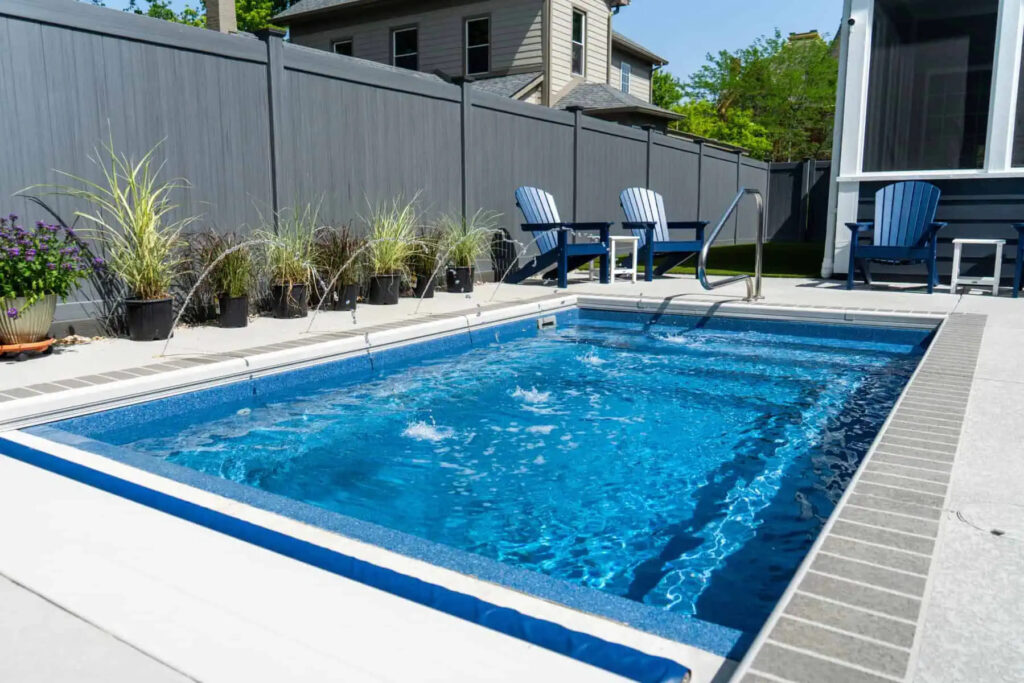
A new inground pool is one of the biggest purchases most families make after the house itself. That’s why the way you pay for it matters almost as much as the pool you choose. This guide breaks down pool financing Pennsylvania homeowners actually use, compares each option side by side, and walks you through a clear process for picking the right one.
You’ll also learn how Pennsylvania’s contractor rules protect you, which mistakes cost buyers the most, and how to match a loan type to your real situation. By the end, you’ll know exactly what to ask your lender and your builder before you sign.
Why the Payment Method Matters as Much as the Pool
Two families can build the same pool and pay very different amounts. The difference comes down to interest, loan term, fees, and whether the loan is tied to their home.
A lower interest rate on a long loan can still cost more overall than a higher rate paid off quickly. And a loan secured by your house carries a risk that an unsecured loan doesn’t. The Consumer Financial Protection Bureau (CFPB) recommends comparing the full cost of credit, including fees and the total paid over the life of the loan, rather than focusing only on the monthly payment.
Timing matters too. Custom inground pool construction in Pennsylvania often follows the seasons, and many builders book their spring and summer slots well in advance. Having your financing lined up early can help you secure a spot on the schedule.
Your Main Pool Financing Options in Pennsylvania
1. Cash or Savings
Paying cash means no interest, no loan applications, and no lien on your home. The trade-off is that it can drain your emergency fund. Most financial planners suggest keeping several months of expenses set aside, even after a big purchase. For help planning this, review our guide on budgeting for a swimming pool.
2. Home Equity Loan
A home equity loan gives you a lump sum based on the equity you’ve built in your house. You repay it at a fixed rate over a set term. Because your home secures the loan, rates are often lower than unsecured options.
3. Home Equity Line of Credit (HELOC)
A HELOC works like a credit line you can draw from as needed. That flexibility fits pool projects well, since builders usually collect payments in stages. Most HELOCs have variable rates, so your payment can rise over time.
4. Cash-Out Refinance
A cash-out refinance replaces your current mortgage with a larger one and gives you the difference in cash. It can make sense if current rates are close to or lower than your existing mortgage rate. If your current rate is much lower, refinancing just to build a pool rarely pays off.
5. Unsecured Pool Loan (Personal Loan)
Many banks, credit unions, and online lenders offer personal loans marketed as pool loans. Approval can be fast, and your home isn’t collateral. Rates depend heavily on your credit score and are usually higher than home equity products.
6. Builder-Arranged Financing
Many professional pool contractors in PA partner with third-party lenders. This can simplify paperwork and speed up approval. Still, compare the offer against at least one outside lender, because convenience doesn’t always mean the best terms. Look for best inground pool contractors who offer transparent financing partnerships.
Pool Financing Options Compared
| Option | Secured by Home? | Rate Type | Funding Speed | Best For |
|---|---|---|---|---|
| Cash/Savings | No | None | Immediate | Buyers with strong reserves |
| Home Equity Loan | Yes | Usually fixed | Several weeks | Homeowners with solid equity who want predictable payments |
| HELOC | Yes | Usually variable | Several weeks | Staged payments and flexible borrowing |
| Cash-Out Refinance | Yes | Fixed or adjustable | Several weeks or longer | When new mortgage rates are favorable |
| Unsecured Pool Loan | No | Usually fixed | Often days | Buyers with limited equity or who want speed |
| Builder-Arranged Loan | Varies | Varies | Often fast | Convenience, if terms are competitive |
Exact rates, fees, and timelines vary by lender and borrower, so treat this table as a starting point for your own quotes.
Home Equity vs. Unsecured Pool Loans: Pros and Cons
These two options are where most Pennsylvania buyers end up choosing, so they deserve a closer look.
Home Equity Loan or HELOC
Pros:
- Lower interest rates in many cases
- Longer repayment terms can lower monthly payments
- Interest may be tax-deductible when the money is used to substantially improve your home (IRS Publication 936 explains the rules; confirm with a tax professional)
Cons:
- Your home is collateral, so missed payments put it at risk
- Closing costs and appraisal fees may apply
- Slower approval than personal loans
- Variable HELOC rates can rise
Unsecured Pool Loan
Pros:
- Your house isn’t on the line
- Fast approval and funding
- Simple application with few or no closing costs
Cons:
- Higher rates, especially with fair or average credit
- Shorter terms mean higher monthly payments
- Loan limits may not cover a large custom project
How to Choose the Best Way to Pay: Conditional Guidance
There’s no single best answer, but your situation usually points to one.
- If you have significant home equity and a stable income, a home equity loan or HELOC will often give you the lowest overall cost.
- If you have little equity or recently bought your home, an unsecured pool loan is likely the more realistic path.
- If your builder bills in stages over several months, a HELOC lets you draw only what you need, when you need it.
- If your current mortgage rate is very low, avoid a cash-out refinance and look at a HELOC or personal loan instead.
- If you need to start fast to hold a spot on the build schedule, a pre-approved personal loan may move quickest.
Step-by-Step: How to Finance an Inground Pool in Pennsylvania
- Set a realistic total budget. Include the pool, decking, fencing, landscaping, electrical work, and permits, not just the shell.
- Get written quotes from at least three builders. Look for the best inground pool contractors PA homeowners recommend, and check pool builder reviews Pennsylvania customers have left on Google and the Better Business Bureau.
- Verify contractor registration. Pennsylvania requires most home improvement contractors to register with the Office of Attorney General. Search the registration database before you sign.
- Check your credit and equity. Pull your credit reports for free through AnnualCreditReport.com and estimate your available equity.
- Collect at least three loan quotes. Compare APR, fees, term, and total repayment from a bank, a credit union, and your builder’s lending partner.
- Match the payment schedule to the contract. Make sure loan draws line up with your builder’s payment milestones.
- Review your contract and rights. Confirm the contract includes the details Pennsylvania law requires, then sign only when everything matches.
Pennsylvania Rules That Protect Pool Buyers
Pennsylvania’s Home Improvement Consumer Protection Act (HICPA) covers many residential pool installation services. Under this law, most contractors doing home improvement work must register with the Pennsylvania Office of Attorney General. Home improvement contracts must be in writing and include specific details, such as the contractor’s registration number, total price, and start and completion dates.
The law also gives homeowners a right to cancel a covered home improvement contract within three business days of signing. Separately, federal Truth in Lending rules generally give borrowers a three-day right to cancel certain loans secured by their primary home, such as many HELOCs.
Pennsylvania doesn’t issue a single statewide pool builder license. When you search for licensed pool builders Pennsylvania offers, focus on HICPA registration, proof of insurance, and any local licensing your municipality requires. Pools also typically need building permits and safety barriers under the Pennsylvania Uniform Construction Code, so ask who pulls the permits.
7 Pool Financing Mistakes to Avoid
- Borrowing based on the monthly payment alone. A low payment over a long term can cost far more in total interest.
- Skipping lender comparisons. Taking the first offer, including builder financing, can leave money on the table.
- Forgetting the extras. Fencing, decking, lighting, and landscaping often add a significant amount beyond the pool itself.
- Paying a huge deposit upfront. Reasonable deposits are normal, but most payments should follow completed work.
- Ignoring variable rate risk. A HELOC payment that rises later can strain your budget.
- Hiring an unregistered contractor. You lose protections and may have trouble with financing or permits.
- Overlooking ongoing costs. Maintenance, chemicals, utilities, insurance, and possible property tax changes continue long after the loan.
Do’s and Don’ts When Working With Builders and Lenders
Do:
- Get every promise, price, and timeline in writing
- Ask builders for local references and recent project photos
- Confirm the contractor’s HICPA registration and insurance
- Compare loan APRs, not just interest rates
Don’t:
- Sign a loan before you have a final, written build contract
- Let a salesperson rush you with “today only” pricing
- Pay in full before final inspection and completion
- Assume the builder’s lending partner offers the best deal
Real-World Scenario
A family in Montgomery County planning a mid-range inground pool with a concrete patio and fencing. They had about ten years of equity in their home and good credit, so they compared a HELOC, an unsecured pool loan, and their builder’s lending partner.
The builder’s loan was easiest, but it carried a higher APR than their credit union’s HELOC. The pool loan funded fastest but had the highest monthly payment. Because their builder billed in four stages, the family chose the HELOC, drew funds only at each milestone, and set a personal plan to pay it down within a few years to limit variable rate exposure.
The lesson isn’t that HELOCs always win. It’s that comparing three real quotes against an actual payment schedule made the right choice obvious.
Quick Answers:
What is the best way to finance a pool in Pennsylvania?
A: For homeowners with strong equity, a home equity loan or HELOC often costs the least overall. Buyers with little equity usually do better with an unsecured pool loan.
Can I finance a pool with bad credit?
A: It’s possible, but expect higher rates and lower loan amounts. Improving your credit before applying, or adding a qualified co-borrower, can help.
Do pool builders in PA offer financing?
A: Many do, usually through third-party lenders. Compare their offer with at least one bank or credit union before accepting.
Is pool loan interest tax-deductible?
A: Interest on a home equity loan or HELOC may be deductible if the funds substantially improve your home, according to IRS rules. Personal loan interest generally isn’t deductible, so check with a tax professional.
How long can a pool loan last?
A: Terms vary by lender and loan type. Personal loans usually run shorter than home equity products, which can stretch much longer.
Does a pool require a permit in Pennsylvania?
A: In most cases, yes. Inground pools typically need building permits and compliant safety barriers, and many builders handle the permit process.
How do I find trustworthy inground pool companies near me?
A: Check HICPA registration, read reviews on multiple platforms, ask for local references, and visit completed projects when possible. Local pool installation experts should be happy to share past work.
Can I cancel a pool contract after signing in Pennsylvania?
A: Pennsylvania’s Home Improvement Consumer Protection Act generally allows cancellation within three business days of signing a covered contract. Read your contract for the exact cancellation terms.
Glossary of Terms
- APR (Annual Percentage Rate): The yearly cost of a loan, including interest and certain fees. It’s the best number for comparing loan offers.
- HELOC (Home Equity Line of Credit): A revolving credit line secured by your home that you can draw from as needed. Rates are usually variable.
- Home Equity: The difference between your home’s current value and what you still owe on your mortgage.
- HICPA: Pennsylvania’s Home Improvement Consumer Protection Act, which requires most home improvement contractors to register and sets rules for written contracts.

Conclusion
The best way to pay for a pool in Pennsylvania comes down to three things: your equity, your credit, and how much risk you’re comfortable putting on your home. Home equity products usually cost less, unsecured pool loans protect your house and move faster, and cash avoids interest entirely if your reserves allow it.
Whatever route you take, get written quotes, compare total borrowing costs, and work only with registered, insured contractors. Smart pool financing in Pennsylvania starts with the right builder and a clear contract.
Ready to plan your pool? Request a detailed, written quote from a trusted local builder, then use this guide to compare your financing options with confidence.