You’ve balanced the chemicals perfectly. You’ve skimmed the leaves, vacuumed the floor, and run the pump for 24 hours straight. Yet, when you look into the deep end, the water still has that dull, hazy look. It’s frustrating, isn’t it? Especially when you have a backyard barbecue planned for this weekend.
The culprit is often hidden inside the heavy tank sitting next to your pump. While sand filters are incredibly durable and reliable, they aren’t invincible. The sand inside them has a lifespan, and ignoring it can cost you hundreds of dollars in wasted chemicals and electricity.
In this guide, we are going to break down exactly when you need to change the sand in a swimming pool filter, the warning signs to watch out for, and how to maintain your system so your pool stays sparkling clean all summer long.
The Short Answer: When to Swap the Sand
For most residential pools, the general rule of thumb is to replace the sand every 3 to 5 years.
However, this isn’t a hard deadline. It really depends on how much work your filter has to do. A pool in a quiet Pennsylvania suburb that sees light use on weekends will last much longer than a pool used daily by a large family and the neighborhood kids.
Here is why that timeframe matters:
- New Sand: Rough and jagged. It catches tiny particles easily, helping you meet standards for water hygiene.
- Old Sand: Smooth and rounded. Debris slips right past it and goes back into the pool.
Think of the sand grains like rocks in a river. Over time, the rushing water wears down the sharp edges until the rocks become smooth stones. The same thing happens inside your filter. When the sand becomes smooth, it loses its ability to trap dirt.
Why Does Sand Go Bad?
It seems strange that sand would “go bad.” It’s just rock, right?
Actually, the physics of filtration relies on the texture of the sand. Pool filter sand is specifically ground silica #20 sand. Under a microscope, fresh silica sand looks like broken glass. It has sharp ridges and rough valleys.
When water flows through your swimming pool filter, dirt, algae, and oils get caught in those rough edges.
Over years of rushing water, backwashing, and chemical exposure, two things happen:
- Weathering: The sharp edges wear off. The sand becomes round, like marbles. When this happens, the gaps between the grains get consistent, allowing fine debris to pass through.
- Clumping (Calcification): Oils from sunscreen, hair products, and high calcium levels can cause the sand to clump together into hard rocks. This creates “channels” where water rushes through without being filtered at all.
When channeling occurs, you could run your pump 24/7 and the water would never get clear because it isn’t actually passing through the sand; it is passing around it.
5 Signs You Need to Change the Sand Immediately
You don’t always have to wait for the 5-year mark. Your pool will usually tell you when it is struggling. If you notice any of these symptoms, it is time to open up the tank.
1. The Water is Constantly Cloudy
This is the most obvious sign. If your chemistry is perfect—pH, alkalinity, and chlorine are all in range—but you are still struggling to troubleshoot persistent cloudy water, your filter is failing. The sand is likely too smooth to trap the fine particulate matter that causes cloudiness.
2. Rising PSI (Pressure)
Keep an eye on your pressure gauge. When the pressure rises 8–10 PSI above your “clean” starting pressure, it usually means the filter is dirty and needs backwashing.
However, if you backwash the filter and the pressure stays high or climbs back up quickly within a day or two, the sand is clogged with oil or calcified. It can no longer be cleaned by a simple backwash.
3. Frequent Backwashing
Do you feel like you are backwashing every week just to keep the flow going? A healthy sand filter should go weeks without needing a backwash. If the intervals between backwashing are getting shorter and shorter, the sand is likely worn out.
4. Sand on the Pool Floor
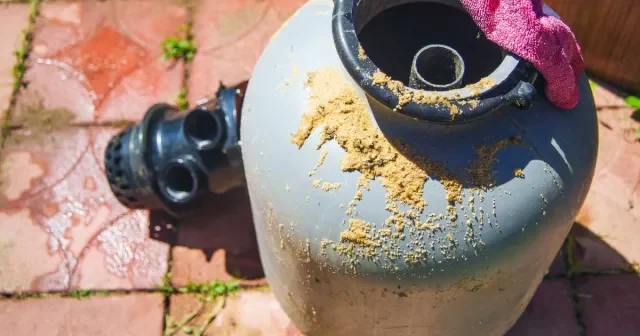
If you see small drifts of sand on the bottom of your pool, especially near the return jets, you have a problem. While this can sometimes mean a broken lateral (a plastic part inside the filter), it often happens when the sand has worn down so much that it is small enough to pass through the laterals and into your pool.
5. The “Channeling” Effect
This is harder to see, but easy to diagnose. If the water flow returning to the pool seems strong, but the water is dirty, the water has created a tunnel through the sand. It is taking the path of least resistance and skipping the filtration process entirely.
The Pennsylvania Factor: Local Climate Impact
As pool owners in Pennsylvania, your pool faces unique challenges compared to pools in Florida or Arizona. Our distinct seasons play a major role in the lifespan of your equipment.
The Winter Closing
In PA, we close our pools for a significant portion of the year. If you aren’t properly winterizing your pool, wet sand can freeze. While the sand itself doesn’t “break” from freezing, the expansion of freezing water inside the tank can crack the laterals at the bottom of the filter.
When you open the pool in late spring, you might find sand blowing into the pool immediately. This is often damage from a harsh winter freeze rather than worn-out sand.
The Pollen and Leaf Load
Our region is beautiful, with lush trees and greenery. However, the heavy pollen count in spring and falling leaves in autumn put a massive load on your swimming pool filter.
Sticky pollen, specifically, can gum up the sand bed faster than normal dirt. If your pool is surrounded by pine or oak trees, you might need to change your sand closer to the 3-year mark rather than the 5-year mark.
[Image Suggestion: A backyard swimming pool in Pennsylvania surrounded by autumn trees, with a skimmer full of leaves.]
Alt Text: Pennsylvania swimming pool in autumn surrounded by trees, highlighting the debris load on the filter.
Choosing the Right Media: Sand vs. Alternatives
When you decide it is time to change the sand in a swimming pool filter, you don’t necessarily have to put standard sand back in. Technology has improved.
Here is a breakdown of the most popular options available for your filter tank.
| Feature | Standard Silica Sand | Filter Glass | Zeolite Sand |
| Material | Mined Silica Rock | Recycled Crushed Glass | Volcanic Mineral |
| Filtration Size | 20–40 Microns | 5–10 Microns | 3–5 Microns |
| Lifespan | 3–5 Years | 7–10 Years | 5–7 Years |
| Cost | Low ($) | Medium ($$) | High ($$$) |
| Key Benefit | Readily available & cheap | Traps finer particles | Can reduce chloramines |
| Cons | Wears out fastest | More expensive upfront | Requires “recharging” |
Recommendation: If you want the best water clarity, we often recommend upgrading to Filter Glass. It catches much smaller particles than standard sand, giving you that “polished” water look, and it lasts almost twice as long.
A Brief Guide to Changing the Sand
If you are handy, changing the sand is a manageable DIY project. However, it is labor-intensive and messy. Here is the general process so you know what to expect.
Tools You Will Need:
- Shop vac (essential)
- Screwdriver
- Garden hose
- Duct tape
- Mask (silica dust is dangerous to inhale)
- The correct amount of new sand (check your filter label)
The Steps:
- Drain the Tank: Turn off the pump and open the drain plug at the bottom of the filter. Let the water drain out.
- Remove the Head: Disconnect the piping and remove the multiport valve (the top part with the handle).
- Cover the Pipe: There is a standpipe right in the center. Cover the opening with duct tape immediately. You do not want sand getting in there.
- Remove Old Sand: This is the hard part. Use a shop vac to suck the old sand out. Do not try to tip the tank over; it is too heavy and you might break the laterals.
- Inspect Laterals: Once the sand is gone, look at the plastic fingers (laterals) at the bottom. If they are cracked or broken, replace them now.
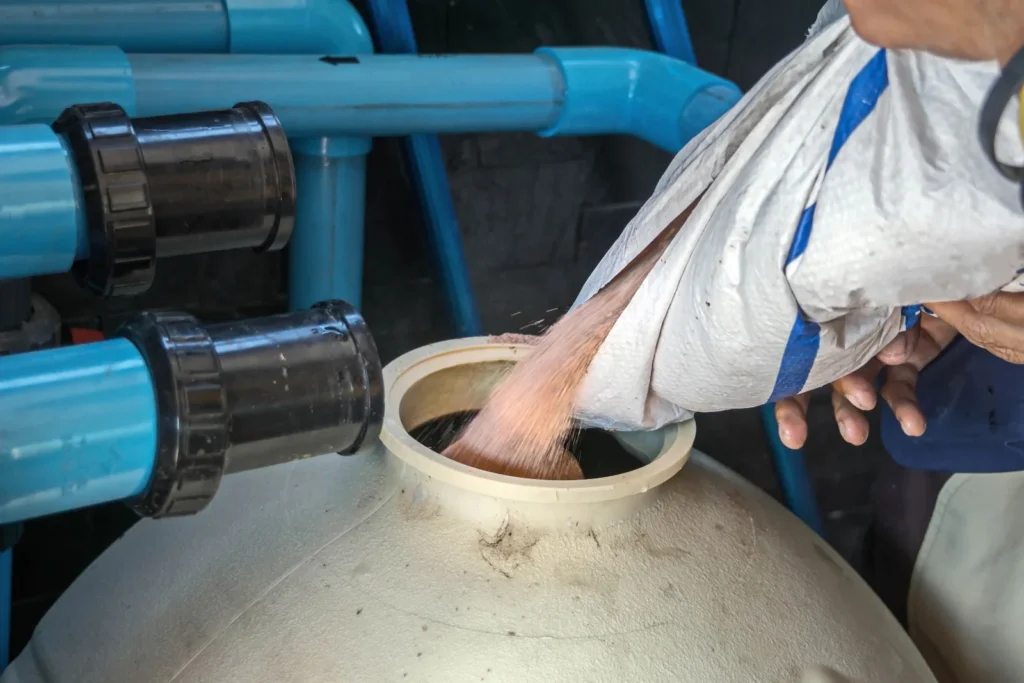
- Add Water First: Before pouring new sand, fill the tank halfway with water. This cushions the fall of the sand so it doesn’t break the plastic parts at the bottom.
- Pour New Sand: Slowly add the new media.
- Reassemble & Backwash: Put the head back on, reconnect pipes, and immediately backwash. Do not run the filter on “Filter” mode yet. You need to rinse the dust out of the new sand first.
Pro Tip: If this sounds like a hassle, or if you are worried about cracking the fragile laterals inside the tank, this is a standard service for pool professionals.
How to Extend the Life of Your Sand
You want to get the full 5 years out of your sand? Maintenance is key.
Use a Filter Cleaner Yearly
Backwashing only removes loose debris. It doesn’t remove the sticky oils and grease from sunscreen. Once a year (usually at closing or opening), use a chemical filter cleaner. You pour it into the skimmer, let it soak in the filter overnight, and backwash it out the next day. This degreases the sand and prevents clumping.
Don’t Over-Backwash
It sounds counter-intuitive, but a slightly dirty filter actually cleans better than a perfectly clean one. The dirt helps trap other dirt. Only backwash when the pressure rises 8–10 PSI. This approach helps in optimizing pump energy efficiency by not running the backwash cycle unnecessarily. If you backwash too often, you are constantly resetting the filter’s efficiency.
Balance Your Water
High calcium hardness causes scale to form on the sand. Low pH can corrode the equipment. Keeping your water balanced protects the physical equipment just as much as it protects swimmers.
When to Call in the Pros
Pool equipment is expensive. While changing sand is a standard maintenance task, one wrong move—like cracking a lateral or stripping a bulkhead fitting—can turn a $50 sand change into a $600 filter replacement.
If you have a large custom pool or a complex system with heaters and automation, it is often safer to let a professional handle the messy work. Plus, hauling 300 pounds of wet, heavy sand out of a filter tank is nobody’s idea of a fun Saturday afternoon.
At Poseidon’s Custom Pools, we understand that a pool is an investment in your home and your lifestyle. Whether you are considering a pool renovation or just need advice on keeping your current one running smoothly, we are here to help.
Conclusion
Clear water starts with a healthy filter. If you have been fighting cloudy water, high pressure, or it has simply been more than 5 years since you touched that tank, it is time to change the sand in a swimming pool filter.
It is one of the most cost-effective ways to improve your water quality. You will use fewer chemicals, run your pump less often, and spend more time swimming and less time troubleshooting. For more insights, you can always check expert maintenance recommendations to keep your pool in top shape.
Don’t let a sluggish filter ruin your summer fun. Check your records—if that sand is from 2020 or earlier, put “change sand” on your to-do list for this season.
Is your pool ready for the Pennsylvania summer? If you are considering a renovation or building a brand new custom pool,contact Poseidon’s Custom Pools today. Let’s make your backyard dreams a reality.